Safety at the lake
By Guatemalan standards, Lake Atitlán is notably safe. That is not minimizing risk, it is acknowledging reality. For the short version by town, boats, hikes, night travel, and common risks, start with Lake Atitlan safety.
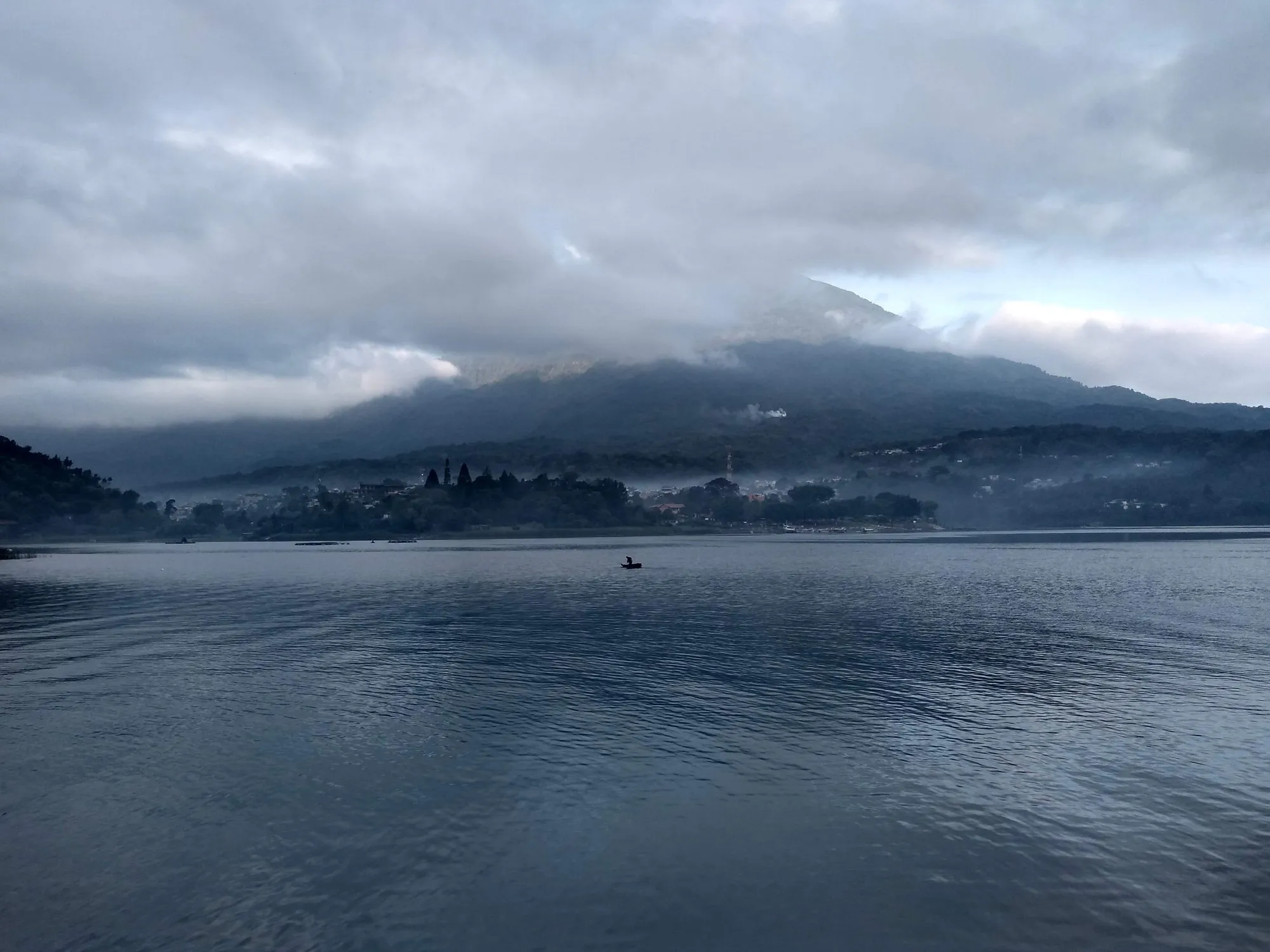
The honest frame
Crime rates in the lake towns (Panajachel, Santiago Atitlán, San Pedro, San Marcos) are a fraction of what you find in Guatemala City or its suburban ring. The US State Department's current travel advisory is a Level 3 "Reconsider Travel" for Guatemala overall. Four areas carry a stricter Level 4 "Do Not Travel" designation: San Marcos Department, Huehuetenango Department, Zone 18 of Guatemala City, and the city of Villa Nueva. Lake Atitlán sits in Sololá Department, which is not on that Level 4 list. US government employees are explicitly permitted to visit the lake region (US State Department, current as of May 2026).
The UK FCDO's Guatemala advice (updated April 2026) flags specific border areas and parts of the Huehuetenango highlands; the lake region is not on that restricted list either. Most days at Atitlán, nothing happens. The communities are tight-knit, residents depend on tourism, and theft hurts a small economy where everyone knows everyone.
Recent context (December 2025 and January 2026)
In December 2025, the Guatemalan government declared a State of Prevention in Sololá Department following violence between the municipalities of Nahualá and Santa Catarina Ixtahuacán, about 30 km west of Panajachel. The lake towns themselves remained calm throughout. In January 2026, Guatemala declared a 30-day national state of siege following gang attacks in Guatemala City. Antigua and Lake Atitlán again remained relatively quiet during that period. Guatemala received 1,610,904 international travelers in the first half of 2025, an 8 percent increase over 2024. These figures do not suggest travelers are avoiding the destination.
Petty theft and the gringo tax
Pickpocketing is the everyday risk. It happens in crowded markets: Panajachel on busy days, Chichicastenango on Thursdays and Sundays. Loose bags, open back pockets, a phone in your hand at a stall: these invite attention. Carry a day pack on your front in crowds, keep electronics tucked away, and skip the visible jewelry. Over 15 years and more than a thousand hosted visitors, one longtime lake resident operator reported witnessing five to ten cases of petty theft and zero violent robberies against tourists (one local operator's account, November 2025). That is an anecdote, not a statistic, but it is a consistent data point from someone with genuine exposure.
Lancha overcharging is the most frequent traveler complaint and it sits firmly in the annoyance column. A Q25 fare becomes Q40 because you don't know the rate. The fix: ask a local, or another traveler who has been here a while, what the route should cost, and hand that amount to the captain. Standard fares run Q10-30 depending on destination. Most operators are honest. A few will try their luck with first-time arrivals.
Shuttle bait-and-switch is similar. You book with one company, a different van shows up. Book through your hotel or a named operator rather than a street tout. ATM skimming is documented in Guatemala broadly: use machines inside banks or hotels, not standalone street ATMs.
Fake police are a documented risk in Guatemala: criminals posing as officers have committed theft, extortion, and assault (UK FCDO, April 2026). If someone claiming to be police stops you, ask to be taken to the nearest police station and contact your embassy if you feel unsafe.
Town-by-town safety
- Panajachel: The busiest town and the one with the most petty theft. Stay alert in the market, on Calle Santander at night, and around the embarcadero.
- San Pedro La Laguna: Lively nightlife. Occasional drunk-tourist incidents after midnight. The volcano trail has had documented robberies; see hiking section below.
- San Marcos La Laguna: Very peaceful. The wellness crowd means a calm atmosphere day and night.
- Santa Cruz La Laguna: Quiet, very safe-feeling. Boat access only means fewer unknowns arriving.
- Santiago Atitlán: Authentic and generally safe, though it can feel unfamiliar. Walk in daylight. The Maximón shrine area is fine to visit.
- San Juan La Laguna: Calm, cooperative-focused. No particular safety concerns beyond universal ones.
Water quality: what the data says
Do not drink the tap water. This applies everywhere around the lake. Bottled water (1.5 L bottles cost Q5-8, or about $0.65-1.00 USD) is widely available. Five-gallon refill jugs cost Q15-25. For longer stays, a quality filter pays for itself quickly. Brush your teeth with bottled or filtered water.
The lake itself has documented water quality issues. About 20 percent of the wastewater produced by the roughly 300,000 people in the basin is treated; the rest flows untreated into the lake (United Nations University working paper; Inter-Academies report, 2024). Cyanobacteria (harmful algae) blooms have occurred since 2009, with major blooms in 2009 and 2015 and smaller annual blooms since. Contact with bloom water can irritate skin; ingestion causes stomach problems.
Arsenic from the volcanic geology of the basin leaches into groundwater. A 2015 study found arsenic concentrations in lake water and tributaries exceeding 20 micrograms per liter, above the Guatemalan drinking water standard of 10 micrograms per liter (Perez-Sabino et al. 2015, cited in Inter-Academies ANC report, 2024). Boiling water does not remove arsenic. Use bottled or filtered water for all drinking and cooking.
Where to swim and where to skip
Swimming in Lake Atitlán is not uniformly safe or unsafe: it depends heavily on where you swim and conditions that day. Generally safer areas include El Jaibalito, Cerro Tzankujil Nature Reserve (San Marcos), and Santa Cruz La Laguna docks. Areas to avoid: the public pier at Panajachel (boat fuel and diesel near docks), any area with visible green foam or algae, and anywhere within range of a large town's wastewater outflow. Avoid swimming after heavy rain. The lake stays at roughly 21°C (70°F) year-round. Watch for hydrilla (pashte) aquatic plants: you can become entangled. Do not jump or dive near boats.
AMSCLAE (the Guatemalan lake authority) assessed in 2019 that public beaches in San Marcos La Laguna, San Pablo La Laguna, and San Pedro La Laguna were suitable for recreation, while Panajachel's public beach (Jucanyá), San Antonio Palopó, San Lucas Tolimán, and Santa Catarina Palopó's Las Termales were not.
Lanchas and the Xocomil wind
The lake is the most consequential thing to respect. The afternoon Xocomil wind builds from roughly midday and peaks between 2:00 and 4:00 PM. It is capable of capsizing a small boat; fatalities have occurred, though more often involving locals than tourists. The reliable rule: morning crossings only, and afternoon crossings only with a captain you know.
Before boarding any lancha, check that life jackets are accessible and the boat is not visibly overloaded. If a boat looks overloaded or does not have life jackets for the number of passengers, wait for the next one. Public lanchas generally stop running around 5:00 PM in dry season and 4:30 PM in wet season.
The US State Department specifically advises: "When traveling to Lake Atitlán, use certified tourist providers and travel between villages on the lakeshore by chartered boat, as perimeter paths pose a serious crime risk and are not easily accessible by emergency services." The inter-village paths between shoreline towns are documented robbery sites.
Hiking, trails, and time of day
Daytime hikes with a registered local guide are safe and worth doing. Hire locally; every town has established guide services, and the cost is modest. The trails that have seen documented robberies are isolated pre-dawn routes and solo hikes: the Indian Nose (Rostro Maya) sunrise hike and the lower slopes of Volcán San Pedro are the most cited examples. San Pedro's local government has stationed four police officers daily plus checkpoints on the volcano trail (Kayak Guatemala, 2023), but verify the current situation locally before going solo.
Practical rules: avoid solo dawn hikes on isolated trails. Avoid walking inter-village paths after dusk. Take a tuk-tuk back to your hotel late at night rather than walking dark roads. Do not photograph people without permission, especially children and in rural areas.
Solo and women travelers
Lake Atitlán is a popular destination for solo female travelers. San Marcos, San Juan, and Panajachel in particular are accustomed to women traveling alone. Standard precautions apply: skip late-night solo walks, watch your drinks, trust your instincts. Machismo culture exists, so occasional catcalling happens; aggressive harassment in the tourist towns is uncommon. San Pedro La Laguna has a more active bar scene and carries slightly more nighttime risk than quieter towns.
Health: altitude, sun, and dengue
At 1,562 m (5,125 ft), the lake is a forgiving altitude. Most people feel mild fatigue on day one. Malaria risk at lake level is low and antimalarial tablets are not usually advised by UK NHS or US CDC for this elevation. Dengue is present even at altitude: use DEET-based insect repellent. The UV index reaches 10 or higher even on overcast days; SPF 50 sunscreen, reapplied every 90 minutes near water, is not optional.
For medical care: private clinics in Panajachel charge Q200-400 ($26-51 USD) for consultations. Pharmacies stock most common medications over the counter, often without a prescription. Serious emergencies require evacuation to Guatemala City hospitals, about three hours away. Travel insurance that includes medical evacuation coverage is strongly advisable.
Earthquakes and volcanoes
Guatemala sits in an active seismic zone. The lake fills a volcanic caldera ringed by Tolimán, San Pedro, and Atitlán. About 30 minor earthquakes were recorded near Volcán Atitlán and the lake between 2024 and 2025, including one of magnitude 3.7 on December 2, 2025. Volcán Atitlán is not currently erupting. Volcán Fuego, about 60 km from the lake, is active and occasionally produces ash clouds that can drift toward the lake with certain winds. INSIVUMEH is Guatemala's official seismic and volcanic monitoring institute.
Standard earthquake protocol: move under a sturdy table or doorway, away from windows. Communities here are earthquake-literate. Ask your accommodation about the evacuation route on your first day.
Emergency contacts
- ASISTUR (tourist assistance): Dial 1500 from a Guatemalan phone, or call +502-2290-2810. WhatsApp: +502-5188-1819. Operates in Spanish and English.
- National Civil Police (PNC): 110
- Volunteer Fire Department (ambulance/fire): 122
- CONRED (disaster management): 1566
- Your country's embassy: Look up the after-hours emergency number before you arrive. US Embassy Guatemala: +502-2326-4000.
If you are pickpocketed, file a report with PROATUR (tourist police) or at the nearest National Civil Police station. A report is needed for insurance claims. Most lake towns have a local police presence; Panajachel has a more established station.
Frequently asked questions
Is Lake Atitlán safe for tourists in 2026?
Yes, for travelers who follow standard precautions. The lake is significantly safer than Guatemala City. The primary risks are petty theft in crowded areas, overcharging on lanchas, and hiking-trail robberies on isolated pre-dawn routes. Violent crime against tourists is rare. The US State Department permits its employees to visit the lake.
Can you drink the water at Lake Atitlán?
No. Tap water is not safe to drink anywhere around the lake. Drink bottled water (Q5-8 per 1.5 L bottle) or use a quality filter. Boiling does not remove arsenic, which is present from the volcanic geology of the basin.
Are the boats at Lake Atitlán safe?
Morning crossings on public lanchas are generally safe. The afternoon Xocomil wind, which peaks from 2 to 4 PM, can capsize a small boat. Always check for accessible life jackets before boarding, and avoid clearly overloaded boats. US State Department recommends chartered boat travel between villages rather than using lakeshore paths.
Is Lake Atitlán safe for solo female travelers?
Yes, with standard precautions. San Marcos, San Juan, and Panajachel are particularly accustomed to women traveling alone. Avoid late-night solo walks in unlit areas, take tuk-tuks at night, and trust your gut. Aggressive harassment is uncommon in tourist towns; unwanted attention (catcalling) occasionally happens.
What should I do if something is stolen at Lake Atitlán?
Contact ASISTUR (dial 1500 or WhatsApp +502-5188-1819) for tourist assistance. File a police report at the nearest National Civil Police station for insurance purposes. Contact your embassy if you need emergency travel documents.
Do I need travel insurance for Lake Atitlán?
Yes. Medical evacuation from the lake to a capable hospital in Guatemala City takes about three hours and is expensive without insurance. Look for a policy that covers medical evacuation, trip cancellation, and theft. Typical cost for a standard trip: $50-150 USD (multiple operator quotes, 2025).
This page is reviewed quarterly. Safety conditions can change. Last verified May 2026.
Sources
- US State Department Guatemala Travel Advisory (accessed May 2026)
- UK FCDO Travel Advice for Guatemala (updated 2026-04-16; accessed 2026-04-25)
- AMSCLAE, Informe de Calidad de Agua de Ríos de la Cuenca del Lago de Atitlán 2019 (AMSCLAE, Guatemalan lake authority, 2019)
- Inter-Academies / ANC, Water Quality in the Americas (interacademies.org, 2024; citing Perez-Sabino et al. 2015)
- Wikipedia: Lake Atitlán (accessed May 2026)
- Altitude at Lake Atitlán | Weather and climate | Getting around