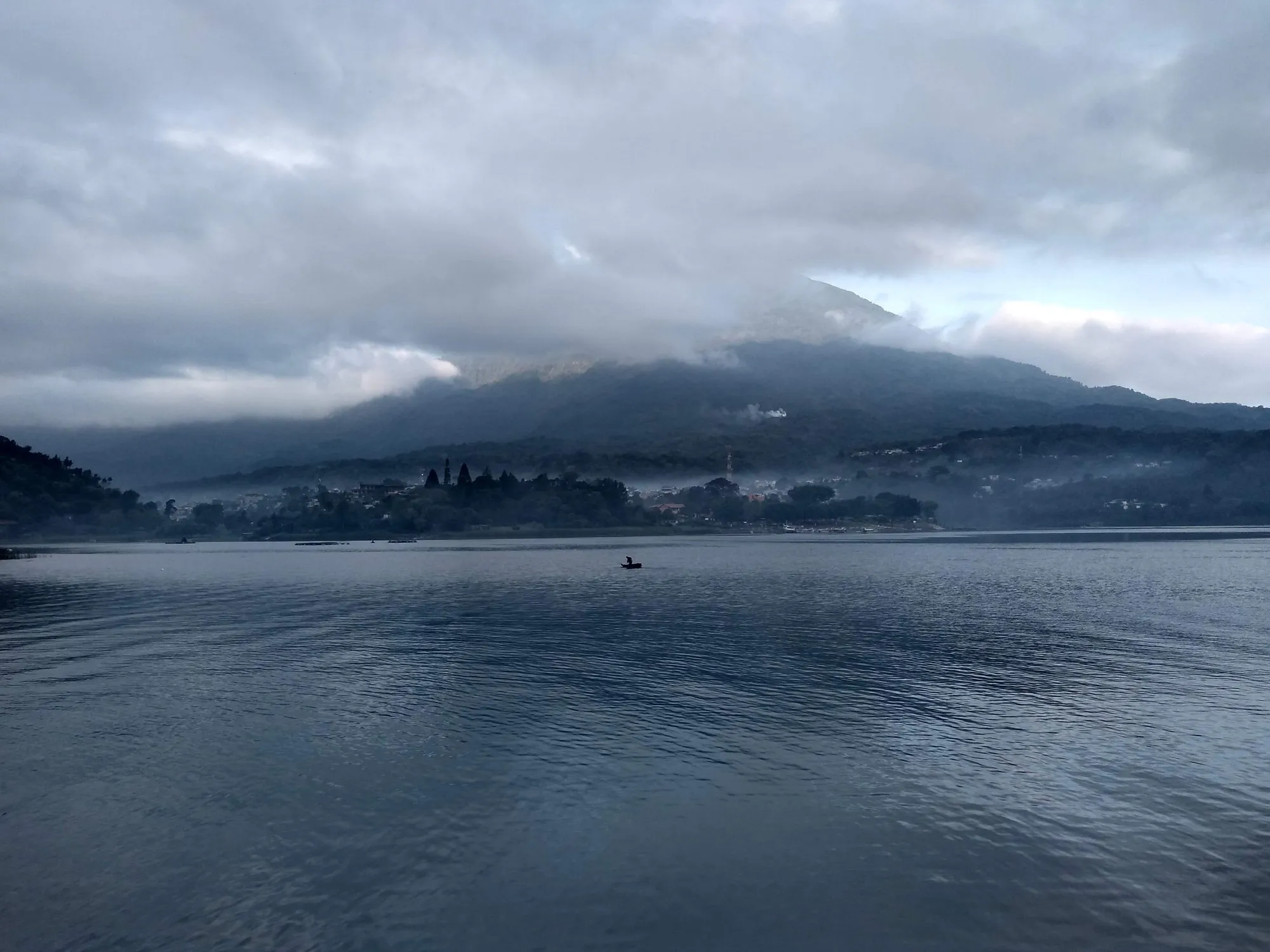
Best Time to Visit Lake Atitlan: 2026 Month by Month Guide
The best time to visit Lake Atitlán is the dry season, November through April, when skies stay clear, boat crossings are calm, and volcano hikes get their best summit views. January is statistically the driest month, and early November is the underrated sweet spot: dry weather, green landscape, and still low-season prices. If budget matters more than guaranteed sun, May and October offer the best value with manageable afternoon rain. Daytime temperatures stay between 20 and 27 degrees Celsius year round thanks to the lake's 1,562 meter elevation.
The lake has two seasons: dry (roughly November through April) and rainy (May through October). Each has genuine advantages, and the "best" time to visit depends entirely on what you want from the experience.
The Dry Season: November Through April
Clear skies, calm mornings, busy docks. The dry season is when most international visitors arrive, and for good reason. Boat crossings are smoother, volcano hikes have better summit views, and you can plan outdoor activities without watching the clouds build every afternoon.
November
The first weeks of November are one of the most underrated times to visit. The rains have tapered off, the landscape is intensely green from months of rainfall, and the tourist crowds have not yet arrived in force. Prices at many hotels and restaurants are still at low-season rates. The light on the lake in November, especially in the afternoon, has a clarity and warmth that photographers tend to love. If you want good weather without peak-season prices and crowds, early to mid-November is a genuine sweet spot.
December
The dry season is fully established. Skies are clear, and the lake has its most vivid deep blue color. Nights turn noticeably cool, occasionally dropping toward 10 degrees Celsius, which surprises visitors expecting a tropical country. Bring layers for evenings. The weeks between Christmas and New Year bring the largest crowds of the year, along with correspondingly higher accommodation prices. Book well in advance if traveling during this period.
January
January is the driest month statistically, with minimal rainfall and consistently clear skies. It is also one of the busiest months, particularly popular with travelers from North America and Europe escaping winter. Accommodation is in high demand, and prices at better hotels reflect that. If you want reliably good weather and do not mind the crowds, January is an excellent choice for a first visit.
February
Similar to January: dry, clear, busy. Temperatures during the day are comfortable, around 23 to 26 degrees Celsius. February tends to be slightly less crowded than January and December, making it a marginally better choice if you value a bit more space at the popular spots.
March
March is the warmest month of the year, with daytime highs sometimes reaching 27 degrees Celsius. It is also when the Xocomil wind is strongest. The Xocomil is a regional afternoon wind that sweeps across the lake, generating significant wave action on open water. It creates ideal conditions for paragliding (which is excellent above Panajachel) and miserable conditions for afternoon boat crossings. Plan boat travel for mornings in March.
The other major consideration in March (and sometimes extending into April) is Semana Santa, the Holy Week celebrations leading up to Easter. Semana Santa at Lake Atitlán, and particularly in Santiago Atitlán and Panajachel, is a major religious and cultural event with elaborate processions, alfombras (carpets of colored sawdust and flowers), and large crowds. Accommodation prices spike dramatically, sometimes doubling or tripling, and hotels can book out months in advance. If you want to see the celebrations, plan early. If you want to avoid the crowds, skip this week entirely.
April
The transition month. The rains have not quite arrived, but the dry season's reliability starts to loosen. Afternoon thunderstorms begin appearing by late April. Crowds thin after Easter, and prices drop. The windy conditions of March continue into early April, which is good news for paragliders and kite enthusiasts.
The Rainy Season: May Through October
Here is something the dry-season crowd misses: the rainy season at Lake Atitlán is genuinely beautiful. The lake's slopes are covered in coffee, avocado, and milpa corn. When they turn vivid green from consistent rainfall, and when dramatic clouds build above the volcanoes each afternoon, the landscape has a grandeur that the dry season's dusty hillsides do not match.
Rain during the rainy season typically falls in the afternoons, often between 2 p.m. and 6 p.m. Mornings are frequently clear and sunny. This means you can hike, visit villages, and explore in the morning, and then retreat to a cafe or your hotel when the rain comes. For travelers with flexibility, this is workable and often quite pleasant.
May and June
The rains begin in May, typically starting with occasional afternoon showers that become more reliable through June. May is a shoulder month where prices drop but weather is not yet consistently rainy. June brings heavier afternoon storms. Crowds thin dramatically, and you will find a much quieter experience in the villages. Prices at accommodation and restaurants are often noticeably lower than high season.
July
July sometimes brings a brief dry spell known as the canícula (or veranillo), a mid-summer pause in the rains lasting anywhere from a few days to a couple of weeks. It does not occur every year, but when it does, July can have some surprisingly pleasant weather. July also sees an uptick in visitors from North America and Europe during summer holidays.
August
Similar to July: rainy afternoons, generally clear mornings. A decent month for families with school-age children, since it falls within summer vacation periods in the northern hemisphere. The lake is quieter than peak dry season.
September
September is the wettest month. Rainfall is heaviest, and the risk of all-day cloud cover is at its highest. It is the month most likely to disrupt outdoor plans. That said, if budget is a priority, September offers some of the lowest prices of the year. Long-term residents often cite September and October as their favorite months for the quality of light, the lushness of the landscape, and the near-absence of tourists.
October
The rains are still heavy in early October, but the month typically shows gradual improvement toward the end. By late October, the landscape is at its most saturated green, and the first hints of the dry season start appearing. A good month for budget travelers and for anyone who wants the lake largely to themselves.
The Xocomil Wind: What Visitors Often Overlook
The Xocomil wind deserves special mention regardless of season. This afternoon wind is a consistent feature of the lake's climate, strongest from December through April but present year-round. It typically picks up between noon and 2 p.m. and can make afternoon boat crossings choppy and uncomfortable.
The practical implication: schedule boat travel and open-water activities for the morning. If you want a smooth crossing from Panajachel to San Pedro or Santiago, aim for before noon. After 1 p.m., assess conditions at the dock before boarding.
Quick Reference: Choosing Your Month
For your first visit and best overall weather: January or February, or early November.
For budget travel with manageable rain: May or October.
For photography and landscape color: late October or early November.
For cultural events and festivals: Semana Santa in March or April (book accommodation months ahead), or the Día de los Santos celebrations on November 1 in Santiago Atitlán.
For hiking the volcanoes: December through March for the clearest summit views.
For families whose school calendars dictate dates: January, February, July, or August depending on when school breaks fall. July and August bring more visitors than September or October but far fewer than December and January.
For Spanish school study: any time of year, but rainy season offers lower prices and more individual attention. See our Spanish schools guide for details.
A note on September: it is the wettest and most difficult month for a short first visit. Heavy rain raises the risk of road closures and landslides on steep volcanic slopes. CONRED (Guatemala's national emergency authority) publishes active alerts at conred.gob.gt and should be checked before travel during heavy rain periods. If your trip is four days or fewer and this is your only Guatemala visit, avoid September. If you have more time and flexibility, September has its rewards: the lowest prices of the year and almost no tourists.
To plan your trip step by step, including accommodation, transport, and town guides, visit our planning section.
Sources
- INSIVUMEH and CONRED rainy season 2026 outlook, accessed 2026-05-20
- INSIVUMEH Central America Climate Forum outlook, accessed 2026-05-20
- CONRED rainy season 2026 guidance, accessed 2026-05-20
- CONRED start of rainy season guidance, accessed 2026-05-20
- AMSCLAE Lake Atitlán limnology monitoring, accessed 2026-05-20
Frequently asked questions
Is 3 days in Lake Atitlan enough? Three days works for a first visit: one orientation day, one village-hopping day by lancha, and one big activity like a hike or Santiago Atitlán. Most two-day visitors wish they had planned four.
When should you avoid Lake Atitlan? September is the wettest and most difficult month for a short first visit, with the highest risk of all-day cloud cover, road closures and landslides on steep slopes. If your trip is four days or fewer, avoid September.
When can you swim in Lake Atitlan? Year round, but always in the morning. The Xocomil wind picks up between noon and 2 p.m. and can turn open water rough, so plan swimming and boat crossings before 11 a.m.
Leave a comment
Comments are reviewed before publishing.
See something to fix or add?
Goes straight to our editors. Not shown publicly.
Comments (0)
No comments yet. Be the first.