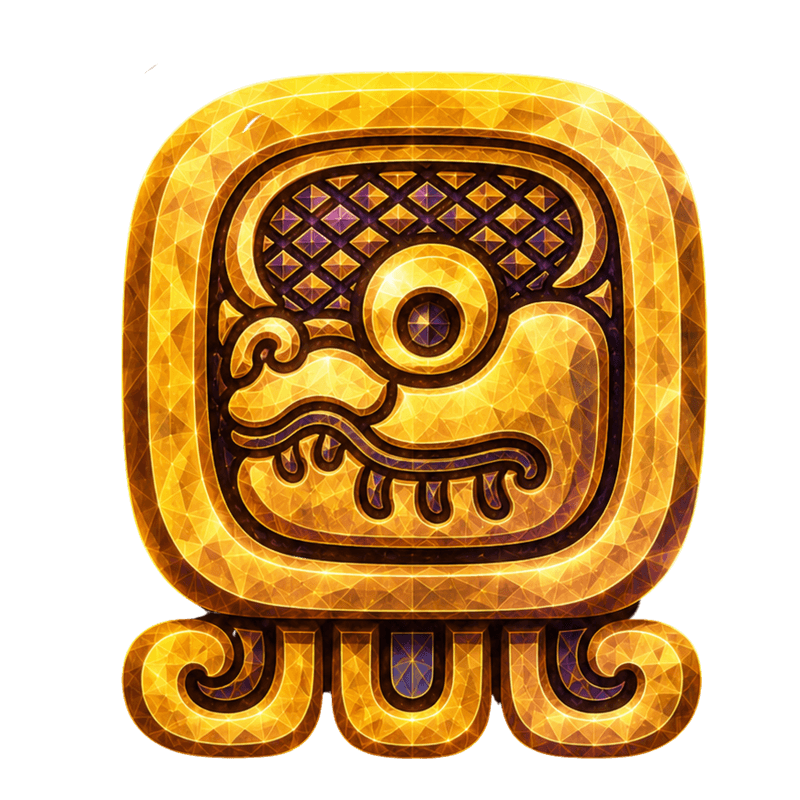
Nawal Kan
Serpent · Truth-speaking, wisdom of the body, transformation.
Nawal Kan is day sign 5 of 20 in the traditional 260-day Maya Cholq'ij calendar kept by Ajq'ijab in Guatemala. Its Yucatec or Classic counterpart is Chikchan. It is associated with serpent, and its central meaning is: The fire serpent, kundalini, justice. Truth-speaking, wisdom of the body, transformation.
You carry fire. Kan is the serpent of sacred energy: coiled, ready, powerful. You feel things with intensity. You are drawn to truth even when it is uncomfortable, and you have a natural instinct for what is real underneath what is performed. People cannot easily deceive you, and you know it.
Your gifts are transformation, courage, and the capacity to shed what no longer serves. Like the serpent that sheds its skin, you are built for reinvention. You can heal deeply, and you are capable of helping others heal once you have done your own work. The body knows things your mind has not caught up to yet. Trust it.
The serpent's danger is venom: using your sharpness to wound rather than to clarify. When you are out of alignment, your directness becomes destruction. Ask yourself before you speak: am I revealing truth, or am I trying to dominate? The distinction is the whole practice of Kan.
What does Nawal Kan mean?
Nawal Kan, also searched as Chikchan, is the Maya Cholq'ij day-sign associated with serpent. In short: The fire serpent, kundalini, justice. Truth-speaking, wisdom of the body, transformation.
| K'iche' name | Kan |
|---|---|
| Yucatec / public variant | Chikchan |
| Common searches | Kan, Kan, Chikchan, kan, Maya nawal, Mayan nawal, nawal maya, nahual, nahual maya, Mayan day sign, Maya birth sign |
| Find your date | Use the Maya nawal calculator |
Your nawal is only half of a Cholq'ij day. Each sign is carried by a number from 1 to 13 that changes its intensity and timing. Learn how the 13 numbers work, or find your own nawal and number.
Go deeper: the documented teaching
Essence
Kan is the nawal of the feathered serpent, the creative life force and bringer of justice in the Maya Tzolk'in calendar. It is linked with framing and shaping, justice, truth, peace, strength, health, and work. This first-pass node uses the Komon Tohil K'iche' daykeeper source as the primary meaning source and keeps Yucatec/Classic mapping separate from Dreamspell seal language.
Strengths
- Skill, wisdom, sincerity, strength, and the ability to restore order without losing vitality.
- Carries a Traditional day/nawal meaning that can be combined later with a 1-13 number coefficient.
Shadow
- Anger can distort the same force that seeks justice and peace.
- Overstating this as a universal Maya personality doctrine would exceed the current source boundary.
Path
Let strength move through truth and peace before it moves through reaction. In runtime synthesis, the day/nawal should carry the core Traditional meaning while the coefficient modifies intensity or timing.
Where the tradition diverges
K'iche' name: Kan. Yucatec/Classic-public mapping: Chikchan. English gloss/source field: feathered serpent. Dreamspell uses a separate seal label for the same index and should not supply this node's meaning. Komon Tohil presents day meanings in a B'atz'-first table; GMT calculation may use an Imix/Imox-first internal sequence.
What does Maya Kan mean?
Kan is the fifth day sign in the traditional Cholq'ij and one of the most charged of the twenty nawales. The feathered serpent at its core is one of the great Mesoamerican symbols: a creature of the earth (serpent) given the capacity to move through air (feathers), pointing to the possibility of transformation from the physical to the spiritual without abandoning either. In K'iche' tradition, Kan carries the force that shapes raw potential into structure: the justice that re-orders what is out of balance, the skilled hands that make something useful and lasting.
Komon Tohil associates Kan days with petitions for health, strength in legal or community disputes, and the kind of work that produces tangible results. The anger listed in its shadow is the same force in uncontrolled form: the raw serpent energy without the feather's guidance.
How does Kan relate to other day signs and the calendar?
Kan follows K'at (net, disentanglement) and precedes Kame (death, ancestral transition). That placement is meaningful: the serpent rises after the net has been untangled and moves toward the threshold of transformation. The feathered-serpent energy of Kan is different from the heavy boundary-work of Kame; it is kinetic, skilled, and concerned with building something that will last.
Use the Nawal Calculator to find the next Kan day in the current 260-day round. For context on how tonal numbers amplify or temper Kan's building force, visit the Tzolk'in Tones hub. The ancient Tz'utujil ceremonial site of Chuitinamit, visible from Santiago Atitlán, is one of the best places at the lake to stand inside the kind of ordered, built presence that Kan represents.
Nawal Kan: frequently asked questions
What does Nawal Kan mean?
Kan (also written Chikchan) is the Cholq'ij day sign of serpent. The fire serpent, kundalini, justice. Truth-speaking, wisdom of the body, transformation.
What are people born on the day Kan like?
Those who carry Kan tend to embody serpent: the fire serpent, kundalini, justice. It is a real strength, and it casts a real shadow of the same shape. The full portrait above shows how Kan tends to move through character, work and relationships.
Is Kan the same as Chikchan?
Yes. Kan is the K'iche' Maya spelling kept by the Ajq'ijab (day keepers) of Lake Atitlán, while Chikchan is a common variant you will see elsewhere. Both name the exact same day sign in the 260 day Cholq'ij count.
How do I know if Kan is my nawal?
Enter your birth date in the Maya nawal calculator. If your Cholq'ij day sign comes out as Kan, this is your nawal. You can also check today's nawal to see when Kan next comes around in the 260 day cycle.
Sources and further reading
This page synthesizes published academic and ethnographic scholarship. It presents the living K’iche’ tradition through documented sources, not as insider authority.
- Komon Tohil (K'iche' Day Keepers Collective), The Meaning of the Days
- Dr Diane Davies, The Maya Calendar Explained, Maya Archaeologist
- Barbara Tedlock, (1992), Time and the Highland Maya
Is Kan your nawal?
Enter your birth date to calculate your Cholq'ij sign, tone, and deep reading path.