The Hidden Garden Atitlan in San Marcos is a tranquil, nature-filled restaurant with excellent specialty coffee, fresh flavorful food, and genuine hospitality. The lush garden setting and friendly staff create an immediate sense of peace and community.
San Marcos La Laguna: Yoga, Cliff Jumps, Wellness
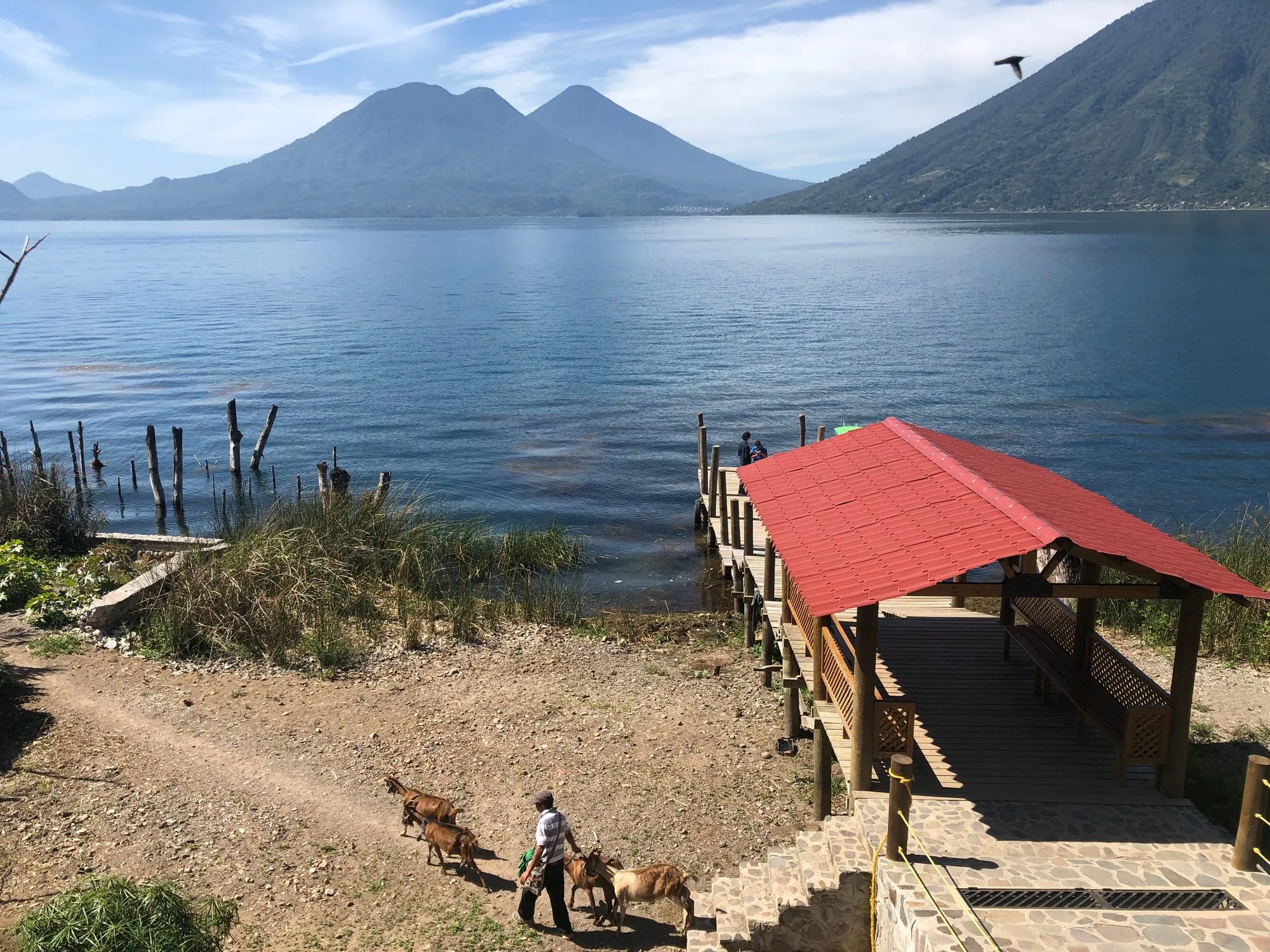
Photos via Google
San Marcos La Laguna is Lake Atitlán's wellness capital: yoga studios, cacao ceremonies, vegan cafes, and cliff jumping at the Cerro Tzankujil reserve.
Yes, San Marcos La Laguna is worth visiting if you want yoga, plant medicine ceremonies, vegetarian food, or to swim and cliff jump at Cerro Tzankujil: it is Lake Atitlán's wellness, yoga, and plant medicine capital, with a car free lower town built around stone footpaths.
San Marcos La Laguna is Lake Atitlán's wellness, yoga, and plant medicine capital, a Kaqchikel Maya village of about 2,944 people on the lake's steep north shore. Its signature attraction is the Cerro Tzankujil nature reserve, where visitors swim and cliff jump into some of the cleanest water on the lake. The lower town is pedestrian only.
Use all 14 Lake Atitlan towns compared to choose a base. Pair this guide with Tzununá and San Pablo La Laguna, its most useful connections around the lake. Compare the decision in San Marcos vs San Pedro.
Is San Marcos La Laguna worth visiting?
Yes, if you want to practice yoga, eat very good vegetarian and vegan food, swim in some of the cleanest water on the lake, or take part in healing and ceremony work. The honest tradeoff is the atmosphere. The lower town runs on a global New Age culture that some travelers love and others find overwhelming or staged. Several visitors note that prices for retreats, classes, and artisan goods can run close to North American levels, and that gentrification has created real tension between long term residents and the international scene. Skip San Marcos if you want nightlife and party bars, or a purely traditional Guatemalan town without the wellness layer. Even skeptics tend to enjoy Cerro Tzankujil, the food, and the lakefront for an afternoon, so it works as a day trip as well as a base.
What are the best things to do in San Marcos La Laguna?
The best things to do in San Marcos La Laguna are swimming and cliff jumping at Cerro Tzankujil, taking yoga or breathwork classes, joining a cacao ceremony, walking the upper Kaqchikel town, hiking toward Tzununá or Santa Cruz with local advice, and kayaking before the afternoon wind.
Swim and jump at Cerro Tzankujil
The Reserva Natural Cerro Tzankujil is the town's main attraction and the best public swimming spot on the lake. It is a small municipal reserve of manicured trails through native forest, a sacred Maya site on the headland, and a wooden jumping platform over deep, clear water. Reported platform heights vary widely, from about 8 meters up to 20 meters depending on the source and the water level, so judge it for yourself at the edge rather than trusting a single number (last checked 2025). Entry uses dual pricing: around Q10 for Guatemalan nationals and Q15 to Q20 for foreigners, cash only (last checked 2025). Hours run roughly 8:00 a.m. to 4:00 or 5:00 p.m. daily (last checked 2025). Bring water, sun protection, and small bills.
Yoga, movement, and breathwork
San Marcos has an unusual density of yoga and movement spaces for a village this size, including Kawoq Forest (formerly The Yoga Forest), Eagle's Nest, and others perched in the hills with panoramic lake and volcano views. Drop in classes are widely available, with travelers reporting around Q50 for a single class at several studios (last checked 2025). Multi day and multi week retreats sit at the other end, and prices climb fast, so compare a few before booking. These are premier wellness destinations.
Holistic healing and ceremony
The town's reputation grew around Las Pirámides del Ka, its first meditation school, where you can still take month long courses. Today you can find almost any practice here: breathwork, Reiki, acupuncture, massage, astrology and tarot readings, sound healing, and traditional Maya fire ceremonies. Cacao ceremonies are a signature experience, with travelers reporting around Q200 per person at established hosts (last checked 2025). Shop around and ask other guests, since quality and intent vary widely.
Walk the upper town and the open air theater
Climb the footpaths to the upper Kaqchikel town to see the Catholic church, the neighborhood market, and everyday local life away from the wellness scene. Near the central park, the open air theater (teatro al aire libre) is painted by international artists, free to enter, and a quiet spot to sit (last checked 2025).
Hike to Tzununá, Santa Cruz, or the miradors
A footpath links San Marcos west to Tzununá and east toward Jaibalito and Santa Cruz, with miradors along the way. Travelers also seek out informal thermal pools (los termales) outside the village, which are unsignposted and unmanaged, so you find them by asking locally. See the safety note below before hiking the rural sections, and our hikes and viewpoints guide for routes.
On and around the water
You can rent stand up paddleboards and kayaks at the lakefront, or arrange a water activity such as a guided paddle from Santa Cruz. San Marcos also makes an easy launch point for day trips to San Juan's weaving cooperatives and San Pedro.
Where to stay in San Marcos La Laguna
Accommodation leans heavily toward eco design and forest integration, which means stairs almost everywhere in the lower town.
- Budget: Simple village guesthouses and hostels run roughly Q150 to Q250 per night, with Hostal del Lago and Circles Café and Hostel among the long running options (last checked 2025).
- Mid range: Boutique guesthouses and small eco hotels such as Lush Atitlán offer plant based kitchens, kitchenette rooms, and lake views, often in the Q400 to Q800 band.
- High end: Eco retreats like Lush Atitlán's premium rooms and Eagle's Nest run from about Q500 to Q1,200 and up, frequently bundled with classes or retreats.
For longer stays, monthly rentals reported around $250 to $500 for a studio or one bedroom and up to $1,200 for a house (last checked 2026). Note the constitutional 200 meter rule: foreigners cannot directly own land within 200 meters of the lake shore, which shapes the rental and purchase market here. Browse our guides to eco-lodges and boutique luxury stays.
Where to eat in San Marcos La Laguna
San Marcos is a top stop for vegetarians and vegans, and it has some of the best bread and coffee on the lake.
- Konojel is a social enterprise restaurant that supports local women, with a vegan friendly plate of the day.
- Circles Café is a community hub known for excellent bread, coffee, and breakfasts from around Q20 (last checked 2025).
- Moonfish serves mostly vegetarian breakfasts, lunches, and dinners, house roasted coffee, and sandwiches, with plates from around Q30 (last checked 2025).
- El Dragón offers Argentine style grilled meats, burgers, and pizza on a lake view terrace, with dishes from around Q25 (last checked 2025).
Meals range from about Q40 for a simple vegan bowl to Q200 and up for tasting menus. See all verified spots in our San Marcos La Laguna restaurants directory.
How to get to San Marcos La Laguna
San Marcos is reached by public lancha (boat taxi). There is no direct car access to the lower town. Boats are first come first served, cash only, and paid on board, and locals generally pay less than visitors.
| Route | Fare (per person) | Duration | Last checked |
|---|---|---|---|
| Panajachel to San Marcos | Q20 to Q25 | 25 to 40 min | 2025 |
| San Pedro to San Marcos | Q10 to Q15 | 10 to 15 min | 2025 |
| San Juan to San Marcos | Q15 to Q20 | about 7 min | 2024 |
| Cerro Tzankujil entry (foreigners) | Q15 to Q20 | flat fee | 2025 |
| Cerro Tzankujil entry (nationals) | about Q10 | flat fee | 2024 |
| Yoga drop in class | about Q50 | per class | 2025 |
| Cacao ceremony | about Q200 | per person | 2024 |
The Panajachel route usually stops at Santa Cruz, Jaibalito, and Tzununá along the way. Shuttles to the Chichicastenango market reportedly run Sundays and Thursdays around 7:30 a.m. (last checked 2024). Expect a walk on arrival, since the lower town paths are pedestrian only. For full transport details, visit our getting here guide and the lancha schedule.
Money, internet, and remote work
There is now one ATM in San Marcos, but it is not reliable. It can be empty or out of service, it charges a withdrawal fee (around Q49), and you should decline the on screen currency conversion. Arrive with enough quetzales for a few days. More places now accept cards than before, but cash still rules.
For remote work, internet is workable but inconsistent. A growing share of cafes and rentals run Starlink as a primary or backup connection, which has improved reliability, but power cuts still happen and speeds vary by spot. Panajachel has the lake's strongest fiber if you need a guaranteed connection for a big call. Plan buffer time and have a backup café or hotspot.
Respecting the town: local life and the wellness scene
San Marcos is a Kaqchikel Maya community first and a wellness destination second, and the two do not always sit comfortably together. Several travelers describe gentrification and tension between long term residents, who are being priced out of land near the lake, and the international scene. You can engage respectfully and keep money in the community:
- Eat and shop at locally rooted places such as Konojel and Circles Café, which source and employ locally.
- Dress modestly in the upper town and around the church and market, even though the lakefront vibe is bohemian.
- Ask before photographing people, ceremonies, or homes, and accept no for an answer.
- Learn a few words. Spanish is the lingua franca; the local Maya language is Kaqchikel. A simple "matyox" (thank you, Kaqchikel) goes a long way alongside Spanish.
See our Maya heritage, cofradía system, and crafts and weaving guides for deeper context.
Safety
San Marcos is generally calm, and violent crime against visitors is rare. Two honest cautions apply. First, the lower town paths are unlit at night, so carry a flashlight and walk with someone after dark. Second, travelers and long running guides report occasional theft and machete robberies on rural roads and isolated trails around the lake. Incidents rarely involve injury, but they do happen. Hike the popular, populated routes in daylight, go in a group on quieter trails, do not carry valuables you cannot lose, and ask your accommodation about current conditions before setting out. For the informal thermal pools and remote miradors, take a local guide or go with others.
When it rains and climate
Lake Atitlán has a tropical savanna climate (Köppen Aw) with a dry season roughly November to April and a wet season roughly May to October. Average temperatures sit around 19 °C, with cooler highland nights, and annual rainfall lands in the 1,000 to 2,000 mm range. In the rainy season, mornings are often clear and sunny, with storms building in the afternoon or evening; the November to April window is best for outdoor activities and the fiesta season. San Marcos was hit hard by Hurricane Stan in 2005, with landslides on the steep slopes, so heavy rain still calls for caution on the paths. Pack layers and a rain shell. For seasonal detail, see our best time to visit and packing guide.
Accessibility
The lower town is pedestrian only and built on steep stone footpaths with frequent stairs, uneven surfaces, and, at times, mud and dog waste. This makes San Marcos difficult for travelers with mobility limitations, wheelchairs, or heavy luggage. If steps are a problem, choose accommodation on or near the upper paved road where tuk tuks can reach you, and pack light. Cerro Tzankujil's main paths are walkable but include slopes and steps.
A short history
- Precolonial: The first Kaqchikel settlers arrived from the Paquip area, and the town was originally known as San Marcos Paquip (per local accounts, last checked 2025).
- 1584: A Franciscan friar, Fray Juan Mendoza, is said to have celebrated the first Mass, the date often cited as the official founding (single local source, treat as approximate).
- Colonial era: The area fell under an encomienda tied to the conqueror Sancho de Barahona; his grandson took formal possession in 1623.
- 1821 to 1840: With Central American independence the town was assigned to the Atitlán circuit, briefly joined the short lived State of Los Altos, and was reincorporated under General Rafael Carrera by 1840.
- 2005: Hurricane Stan caused severe landslides and pushed waste into the lake, prompting a long reconstruction.
Suggested itineraries
San Marcos in 1 day
Arrive by morning lancha, walk to Cerro Tzankujil for a swim and a jump, lunch at Konojel or Moonfish, take a drop in yoga class or a massage, watch the sunset from a mirador or the lakefront, then catch a boat back.
San Marcos in 3 days
Day 1 as above. Day 2: a morning yoga class, then a hike to Tzununá for lunch and the return walk, with a cacao ceremony in the evening. Day 3: explore the upper Kaqchikel town and the open air theater, browse local shops, and take a day trip by lancha to San Juan's weaving cooperatives.
San Marcos in 7 days
Add a multi day yoga or meditation course, a Spanish class at a local school, deeper hikes toward Santa Cruz with a guide, a slower exploration of cafes and healers, and a full day trip to Panajachel or San Pedro. A week is enough to settle into the walking pace the town is built around.
Frequently asked questions
What is the hippie town on Lake Atitlán? San Marcos La Laguna is the one most travelers mean: it is the lake's wellness and New Age hub, known for yoga, cacao ceremonies, and holistic healing.
What is San Marcos La Laguna known for? Yoga, meditation, cacao and other ceremonies, holistic healing, vegetarian and vegan food, and swimming and cliff jumping at the Cerro Tzankujil nature reserve.
Is San Marcos La Laguna safe? Yes, for most visitors. Violent crime against travelers is rare. Carry a flashlight at night on the unlit paths, and take care on isolated rural trails where occasional theft has been reported. Use popular routes in daylight and ask locally about current conditions.
How do I get to San Marcos La Laguna? By public lancha. From Panajachel it is about Q20 to Q25 and 25 to 40 minutes; from San Pedro about Q10 to Q15 and 10 to 15 minutes (last checked 2025).
How long is the boat ride from Panajachel to San Marcos? About 25 to 40 minutes, depending on lake conditions and stops at Santa Cruz, Jaibalito, and Tzununá along the way.
Can you swim in Lake Atitlán at San Marcos? Yes. The water at Cerro Tzankujil is considered some of the cleanest on the lake and is a popular, deep swimming and jumping spot.
What language is spoken in San Marcos La Laguna? Spanish is the official language and the common one with visitors, while the majority indigenous language is Kaqchikel. English is widely understood in the wellness scene.
Are there ATMs in San Marcos La Laguna? There is one ATM, but it is unreliable and can be empty. Withdraw cash in Panajachel or San Pedro before arriving and bring enough for a few days.
Can I get a tuk tuk to my hotel? Only if your hotel is on the upper paved road. The lower town near the lake is entirely pedestrian, so pack light or be ready to carry your bags up stone paths.
Practical tips
- Cash: Bring quetzales for several days. The single ATM is unreliable and many small vendors are cash only.
- Footwear: Leave the heels at home. The paths are uneven, often muddy, and full of stairs. Good sandals or light hiking shoes are essential.
- Modesty: The lakefront is bohemian, but you are in a traditional Maya village. Dress modestly in the upper town.
- Compare prices: Retreats, classes, and artisan goods vary a lot. Ask other guests and shop around before committing.
This page draws on official sources (INE, Wikipedia, Guatemala.com, Aprende Guatemala) and current travel reporting, last verified 2026-05-29. See something off? Suggest an edit.
Lake conditions
Weather in San Marcos La Laguna: Yoga, Cliff Jumps, Wellness
Loading…
Data: Open-Meteo (ECMWF/GFS global models). Lake microclimates can vary.
Where to eat in San Marcos La Laguna: Yoga, Cliff Jumps, Wellness
6 top picks below, plus 20 restaurants total in San Marcos La Laguna: Yoga, Cliff Jumps, Wellness on our master list.
Top picks
La Orquídea Restaurant and Beach Bar in San Marcos serves gourmet fare like fresh pizza and flawless seafood with excellent cocktails and stunning lake views. The beachside setting and friendly service make it a relaxing spot for families and groups.
Eagle's Nest Atitlan in San Marcos is a wellness-focused retreat with stunning views, fresh daily-prepared food, daily yoga and meditation classes, and a strong community vibe. Guests consistently praised the accommodating staff and peaceful mountain setting.
Konojel Restaurant in San Marcos serves authentic Guatemalan specialties like pupusas and pepian at affordable prices, with a mission supporting local women and their families. Food is fresh, generously portioned, and the cozy space offers direct kitchen views.
Anzan Atitlan plus Casa Rosada in San Marcos offers an exclusive retreat with exquisite design, impeccable service under host Dita, and refined amenities including sauna and water sports. Guests consistently praised the peaceful, personal experience and exceptional breakfasts.
La Cocina at Lush in San Marcos combines botanical ambiance with locally sourced, nutritious cuisine including standout ceviche and specialty lattes. The peaceful garden setting appeals to remote workers, though service can be slow when understaffed.
Things to Do
Activity guides, hikes, ceremonies, and day trips from San Marcos La Laguna: Yoga, Cliff Jumps, Wellness.
Explore →Events & Fiestas
Patron saint days, markets, and ceremonies happening here.
See calendar →Where to Stay
Hostels, hotels, retreat centers, and long-term rentals: coming soon.
Browse → Leave a comment
Comments are reviewed before publishing.
Near San Marcos La Laguna: Yoga, Cliff Jumps, Wellness
Cerro de Oro: Sacred Hike & Little Prince Legend Jaibalito: Lake Atitlan's Quietest, No-Car Village Panajachel: Lake Atitlan's Gateway and Transport Hub San Antonio Palopó: Ceramics and Blue Woven Textiles
Comments (1)