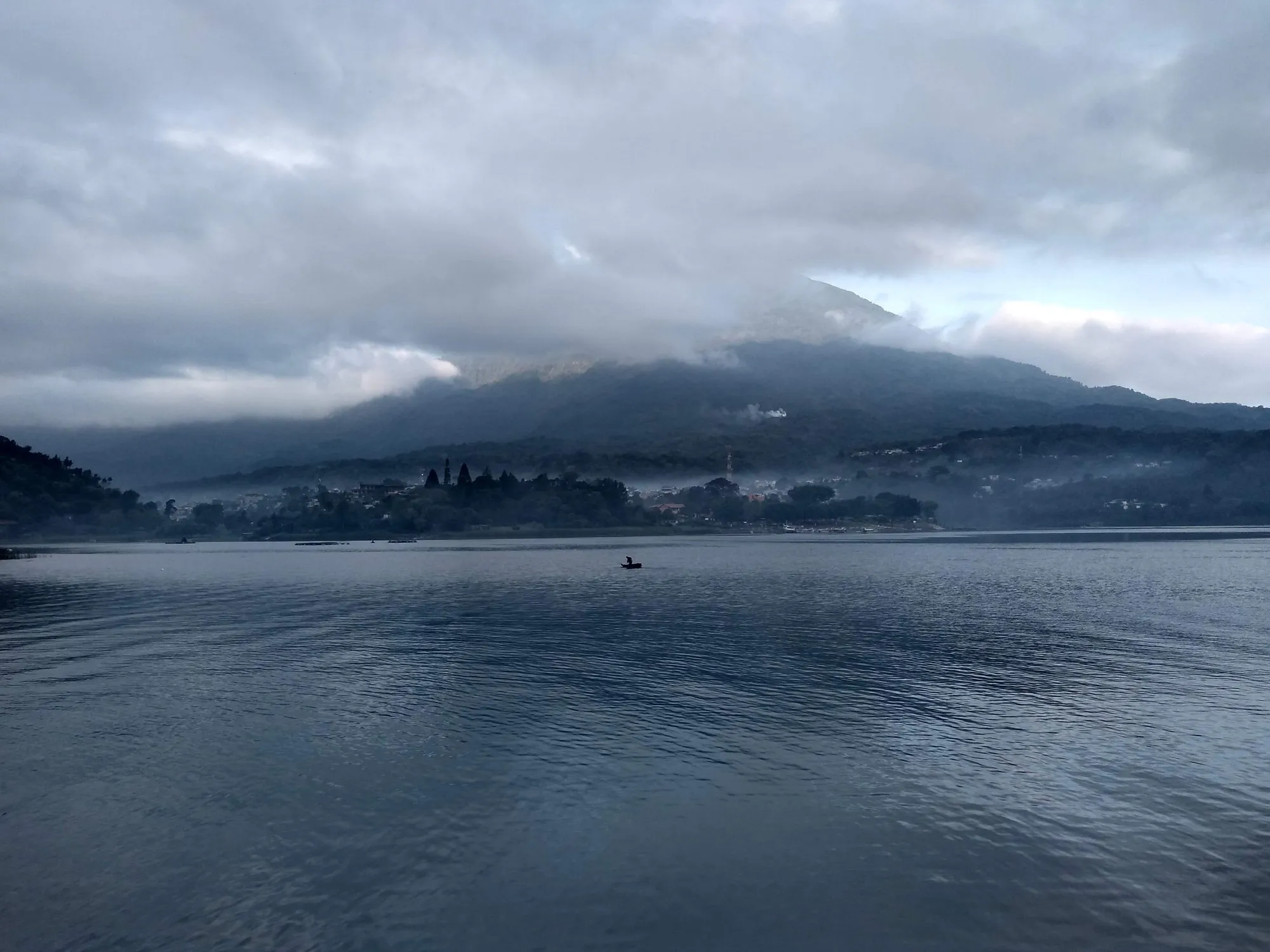
Is Lake Atitlan Safe in 2026? Honest Advisory Breakdown
Yes, Lake Atitlán is generally safe to visit in 2026, though Guatemala overall carries a US State Department Level 3 "Reconsider Travel" advisory. The lake sits in Sololá Department, which is not one of the four Level 4 "Do Not Travel" zones, and US Mission personnel are explicitly permitted to visit. The lake stayed calm through both the December 2025 Sololá State of Prevention and the January 2026 national state of siege, neither of which was reported to affect the tourist towns.
Lake Atitlán is not among Guatemala's four Level 4 "Do Not Travel" zones (San Marcos, Huehuetenango, Guatemala City Zone 18, and Villa Nueva). The US State Department confirms government personnel may travel to the lake. Guatemala's national homicide rate was 16.1 per 100,000 in 2023 per Human Rights Watch, concentrated mainly in Guatemala City and border departments, not Sololá.
The Official Advisory Landscape
United States: Level 3 "Reconsider Travel"
The US State Department rates Guatemala as Level 3 "Reconsider Travel" due to crime and terrorism. Level 3 is the second-highest of four tiers. Four specific zones carry the top-tier Level 4 "Do Not Travel" designation: San Marcos Department, Huehuetenango Department, Zone 18 in Guatemala City, and the city of Villa Nueva.
Lake Atitlán is in Sololá Department, which is not among those Level 4 zones. The State Department explicitly confirms that US Mission personnel are permitted to travel to Lake Atitlán, alongside Tikal, Antigua, and the Pacific coast.
The OSAC Country Security Report corroborates this: the lake does not appear among zones of elevated concern. Elevated concern zones are concentrated in specific districts of Guatemala City and the four Level 4 areas.
United Kingdom: High Caution with Documented Road Risks
The UK Foreign Commonwealth and Development Office describes Guatemala as having "one of the highest violent crime rates in Latin America" and has documented armed attacks on tourists traveling by road to major sites including Lake Atitlán. Its guidance recommends using radio-dispatched or hotel taxis, not street taxis hailed from the roadside.
Canada: High Degree of Caution
Canada's travel advisory calls for exercising "a high degree of caution in Guatemala due to high levels of crime, roadblocks, and demonstrations." It was last updated May 4, 2026. Canada's advisory is a lower overall tier than the US Level 3, though both recommend heightened vigilance.
Canada's page also notes that isolated roads near Lake Atitlán have scarce police presence, and recommends seeking travel agency advice for any off-road travel in the remote highlands (single-source claim from the Canadian advisory text).
What Happened in Late 2025 and Early 2026
Two significant security events affected Sololá Department and Guatemala nationally.
December 2025: State of Prevention in Sololá
In December 2025, the Guatemalan government declared a State of Prevention in Sololá Department following deadly violence between the municipalities of Nahuala and Santa Catarina Ixtahuacan. President Arévalo attributed the violence to organized crime groups seeking territorial control. The Tico Times reported at least five deaths, with other sources citing higher figures.
The two affected municipalities are in the Sololá highlands, roughly 30 km west of Panajachel. The standard lake tourist towns (Panajachel, San Pedro La Laguna, Santiago Atitlán) are in a separate part of the department. No source confirmed direct impact on tourist areas of the lake during this event.
January 2026: National State of Siege
In January 2026, Guatemala declared a 30-day national state of siege after Barrio 18 gang members staged coordinated prison riots and attacked law enforcement in Guatemala City, killing multiple police officers. The Tico Times reported that Antigua and Lake Atitlán remained relatively calm during the unrest, and that the US State Department did not upgrade its advisory despite the violence.
Crime in Context
Guatemala's national homicide rate was 16.1 per 100,000 in 2023 according to Human Rights Watch, down from a peak of 46 per 100,000 in 2009. InSight Crime estimates the rate rose to approximately 17.4 per 100,000 in 2025, with 3,139 murders recorded nationally.
Important context: gang violence in Guatemala is heavily concentrated in Guatemala City's urban zones and the border departments of San Marcos and Huehuetenango. OSAC data shows elevated concern zones are in specific Guatemala City districts (Zones 5, 6, 7, 12, 13, 17, 19, 21, 24) and the four Level 4 areas. Sololá and Lake Atitlán do not appear in those lists.
One honest gap: no official Guatemalan police (PNC) crime statistics broken down by department specifically for Sololá were accessible during research for this article. The PNC publishes monthly crime bulletins but the database was not accessible. The national picture is clearer than the local one.
Specific Safety Advice for Lake Atitlán
The State Department and OSAC offer several specific recommendations for visitors to the lake.
Certified providers and chartered boats. The State Department advises travelers to use certified tourist providers and travel between lakeshore villages by chartered boat, because perimeter paths pose a serious crime risk and are not easily accessible by emergency services.
Hiking with a local guide. The same advisory states that "hiking in the area, while popular, is best undertaken with the assistance of a local guide to ensure safety, as criminals are known to target some routes." Do not hike the volcanoes or connecting trails solo.
Taxis and transport. Use only INGUAT-approved taxis from the "SAFE" stand at La Aurora Airport, hotel taxis, or app-based services such as Uber. The State Department explicitly prohibits US government employees from using public "chicken buses" or unofficial white street taxis. Many kidnappings nationally have involved street-hailed taxis, per the UK FCDO.
Nighttime travel. US government employees cannot drive outside Guatemala City at night. The same guidance is sensible for all travelers. Avoid road travel after dark.
ATMs. The UK FCDO notes that ATM tampering is prevalent. Use ATMs only inside banks or hotels, not standalone machines on the street.
Drink safety. OSAC advises visitors not to leave drinks unattended in bars and restaurants, and not to accept invitations from strangers to private parties.
Express kidnappings. The UK FCDO warns that express kidnappings (short-term abductions aimed at extracting cash) are common in Guatemala. This is primarily a Guatemala City risk, but travelers should remain situationally aware anywhere.
Fake police. Both the US and UK governments warn that criminals posing as police officers have committed theft, extortion, and assault against visitors. If stopped by someone claiming to be police, you have the right to request their ID and, if in doubt, ask to go to the nearest station.
Tourist Safety Infrastructure
Guatemala's Tourist Assistance Program ASISTUR operates at Lake Atitlán alongside the tourist police (DISETUR). According to the State Department, ASISTUR's emergency call center is available 24/7 in Spanish and English.
Contact ASISTUR:
- Phone: 1500 (from a Guatemalan number) or +502-2290-2810
- WhatsApp: +502-5188-1819
Security escort groups are available for tourist groups upon request. Requests must be submitted at least three business days in advance, with your itinerary, traveler names, and vehicle details.
Other emergency numbers:
- Police: 110 or 120
- Fire: 122 or 123
- CONRED (disaster emergencies): 1566
- US Embassy emergency after-hours: +502-2354-0000
Natural Hazards at Lake Atitlán
Safety at the lake is not only about crime. The physical environment has its own considerations.
Earthquakes
Guatemala carries a high earthquake hazard level nationally. According to ThinkHazard, Santiago Atitlán specifically has "more than a 20% chance of potentially-damaging earthquake shaking in the next 50 years." The lake region sees ongoing minor seismicity: approximately 30 smaller earthquakes have been recorded near the Atitlán volcano and lake area since 2024, including a magnitude 3.7 event on December 2, 2025, according to VolcanoDiscovery. Academic research published in the Journal of Geophysical Research: Solid Earth confirms ongoing seismic strain accumulation from the North America-Cocos plate convergence near the lake.
Know your hotel's emergency exits. In an earthquake, drop, cover, and hold on.
Volcanoes
Atitlán Volcano is not currently erupting, and no significant eruption has been recorded in recent years (based on absence of entries in the Smithsonian Global Volcanism Program for this volcano, though no official "dormant" statement exists). Fuego Volcano, approximately 60 km from the lake, is Guatemala's most active volcano and has had eruption events in 2025. Fuego eruptions do not pose a direct threat to the lake zone but can produce ashfall; check CONRED advisories before volcano excursions.
Rainy Season Hazards
The lake sits at 1,562 m (5,125 ft) in the Guatemalan highlands. The rainy season runs May through October. CONRED's August 2024 rainy season update recorded floods and landslides causing fatalities across nine departments. Mountain roads can close without warning during heavy rain. Allow extra travel time and check road conditions before departing.
The Bottom Line
Lake Atitlán sits inside a country with a Level 3 advisory, serious crime challenges, and recent episodes of gang-driven violence. It is not risk-free travel. At the same time, it is not in a Level 4 zone, US government personnel are permitted to visit, and it remained calm during both the December 2025 and January 2026 security crises that affected other parts of Guatemala. Guatemala welcomed 1,610,904 international travelers in the first half of 2025 alone, an 8% increase over 2024, and the lake continues to be a major part of that figure.
Travel here with preparation: use certified operators, take boats between villages (not perimeter paths), hike only with a guide, use ASISTUR if something goes wrong, and monitor the US Embassy alerts before and during your trip.
Frequently asked questions
Is it safe to walk between lake villages?
The US State Department specifically advises against it. Perimeter paths between lakeshore villages "pose a serious crime risk and are not easily accessible by emergency services." Travel between villages by boat (lancha), not on foot via lakeside trails.
Is it safe to hike the volcanoes at Lake Atitlán?
Possible, but only with a licensed local guide. The State Department warns that criminals are known to target some hiking routes. Book through a certified operator and do not hike independently.
Should I be worried about the Sololá violence from December 2025?
The December 2025 violence occurred in Nahuala and Santa Catarina Ixtahuacan, approximately 30 km west of Panajachel in the highland interior. No source confirmed direct impact on the lake tourist towns. The State of Prevention has since lifted. Monitor the US Embassy Guatemala alerts for any new advisories before your trip.
What should I do if I have a safety emergency at Lake Atitlán?
Call ASISTUR at 1500 (Guatemalan number) or +502-2290-2810 (WhatsApp: +502-5188-1819). ASISTUR is available 24/7 in Spanish and English and coordinates with the DISETUR tourist police at the lake. For medical or police emergencies, call 110. For the US Embassy after-hours line, call +502-2354-0000.
Sources
- US State Department Guatemala Travel Advisory: https://travel.state.gov/content/travel/en/traveladvisories/traveladvisories/guatemala-travel-advisory.html (accessed 2026-05-20)
- US State Department Guatemala Country Information: https://travel.state.gov/content/travel/en/international-travel/International-Travel-Country-Information-Pages/Guatemala.html (accessed 2026-05-20)
- US Embassy Guatemala Level 3 Advisory: https://gt.usembassy.gov/guatemala-travel-advisory-level-3-reconsider-travel-2/ (accessed 2026-05-20)
- US Embassy Security Alert: Sololá State of Prevention, December 2025: https://gt.usembassy.gov/security-alert-for-u-s-citizens-state-of-prevention-in-solola-department-december-15th-2025/ (accessed 2026-05-20)
- OSAC Guatemala Country Security Report: https://www.osac.gov/Country/Guatemala/Content/Detail/Report/bca4f0c6-8002-4ecf-9719-1ee71fe3b5f3 (accessed 2026-05-20)
- UK FCDO Guatemala Safety and Security: https://www.gov.uk/foreign-travel-advice/guatemala/safety-and-security (accessed 2026-05-20)
- Canada Travel Advisory Guatemala: https://travel.gc.ca/destinations/guatemala (accessed 2026-05-20)
- Tico Times: Guatemala Restricts Civil Rights in Indigenous Region After Deadly Shootings: https://ticotimes.net/2025/12/14/guatemala-restricts-civil-rights-in-indigenous-region-after-deadly-shootings (accessed 2026-05-20)
- Tico Times: US Keeps Travel Warning for Guatemala After January Gang Attacks: https://ticotimes.net/2026/02/16/us-keeps-travel-warning-for-guatemala-after-january-gang-attacks (accessed 2026-05-20)
- JURIST: Guatemala Declares National Emergency Following Continued Gang Violence: https://www.jurist.org/news/2026/01/guatemala-declares-national-emergency-following-continued-gang-violence/ (accessed 2026-05-20)
- Human Rights Watch World Report 2025, Guatemala: https://www.hrw.org/world-report/2025/country-chapters/guatemala (accessed 2026-05-20)
- InSight Crime 2025 Homicide Round-Up: https://insightcrime.org/news/insight-crime-2025-homicide-round-up/ (accessed 2026-05-20)
- ThinkHazard: Santiago Atitlán Earthquake Risk: https://www.thinkhazard.org/en/report/64945-guatemala-solola-santiago-atitlan/EQ (accessed 2026-05-20)
- ThinkHazard: Guatemala Earthquake Hazard: https://www.thinkhazard.org/en/report/103-guatemala/EQ (accessed 2026-05-20)
- VolcanoDiscovery: Atitlán Earthquake Activity: https://www.volcanodiscovery.com/atitlan-earthquakes.html (accessed 2026-05-20)
- Journal of Geophysical Research: Solid Earth (2026), Lake Atitlán seismicity: https://agupubs.onlinelibrary.wiley.com/doi/10.1029/2025JB032397 (accessed 2026-05-20)
- Smithsonian Global Volcanism Program, Fuego: https://volcano.si.edu/volcano.cfm?vn=342090 (accessed 2026-05-20)
- CONRED/ECHO Rainy Season Update August 2024: https://reliefweb.int/report/guatemala/guatemala-rainy-season-update-conred-who-paho-insivumeh-echo-daily-flash-20-august-2024 (accessed 2026-05-20)
- Breaking Travel News: Guatemala 8% Visitor Surge 2025: https://www.breakingtravelnews.com/news/article/guatemala-announces-8-surge-in-visitor-numbers-in-the-first-half-of-2025/ (accessed 2026-05-20)
Leave a comment
Comments are reviewed before publishing.
See something to fix or add?
Goes straight to our editors. Not shown publicly.
Comments (0)
No comments yet. Be the first.