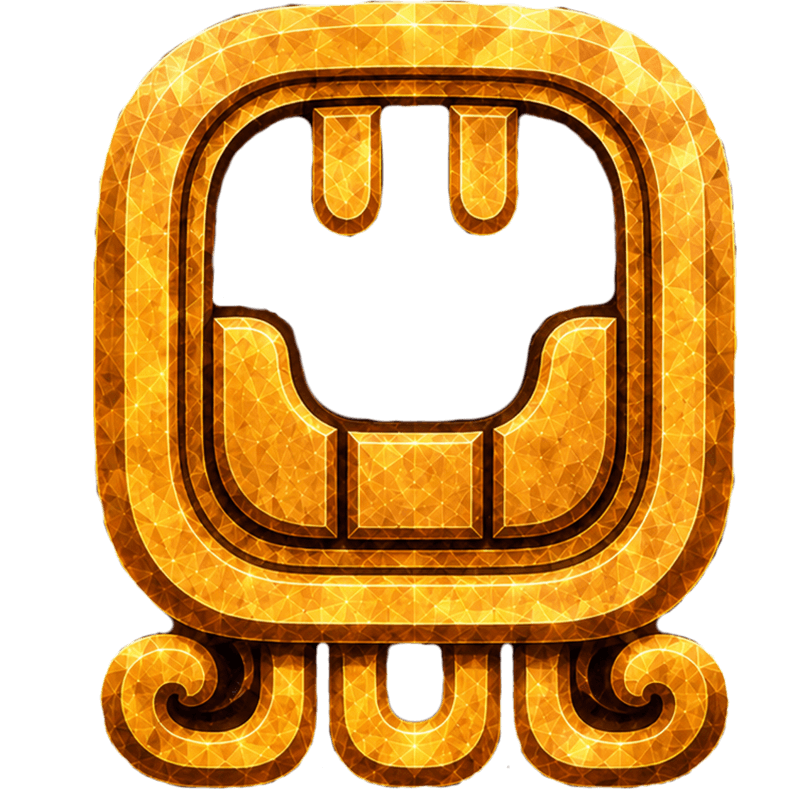
Nawal Aj
Cane / Reed · Family, harvest, dignity, growth upward.
Nawal Aj is day sign 13 of 20 in the traditional 260-day Maya Cholq'ij calendar kept by Ajq'ijab in Guatemala. Its Yucatec or Classic counterpart is B'en. It is associated with cane / reed, and its central meaning is: The home, the corn, the staff of authority. Family, harvest, dignity, growth upward.
You build homes, not only physical ones. Aj carries the energy of the cornstalk: upright, nourishing, a structure around which family and community gather. You are someone people return to. You know how to create belonging without making a performance of it. This is rarer than it sounds.
Your gifts are warmth, quiet dignity, and an authority that comes from genuine care rather than position. You are excellent with family, children, and long-term commitments. You grow upward and provide. People feel safe around you because you actually are safe: consistent, honest, present.
The challenge of Aj is rigidity: the cane that will not bend will break. You can hold to structures, family expectations, or personal codes long past the point of wisdom. Give yourself permission to let the structure evolve, not merely maintain. The cornstalk bends in the wind. That is not weakness. That is how it stays standing.
What does Nawal Aj mean?
Nawal Aj, also searched as B'en, is the Maya Cholq'ij day-sign associated with cane / reed. In short: The home, the corn, the staff of authority. Family, harvest, dignity, growth upward.
| K'iche' name | Aj |
|---|---|
| Yucatec / public variant | B'en |
| Common searches | Aj, Aj, B'en, aj, Maya nawal, Mayan nawal, nawal maya, nahual, nahual maya, Mayan day sign, Maya birth sign |
| Find your date | Use the Maya nawal calculator |
Your nawal is only half of a Cholq'ij day. Each sign is carried by a number from 1 to 13 that changes its intensity and timing. Learn how the 13 numbers work, or find your own nawal and number.
Go deeper: the documented teaching
Essence
Aj is the nawal of the home, the cornstalk, and the upright pillar of family authority in the Maya Tzolk'in calendar. In K'iche' tradition it encompasses the cane plantation, milpa, corn, and a rod of virtues of divine power; it is framed as a meaningful day of triumph. This first-pass node uses the Komon Tohil K'iche' daykeeper source as the primary meaning source and keeps Yucatec/Classic mapping separate from Dreamspell seal language.
Strengths
- Calm intelligence, luck, and the capacity to stand upright as a living measure.
- Carries a Traditional day/nawal meaning that can be combined later with a 1-13 number coefficient.
Shadow
- Moodiness can bend the rod or disrupt the field it protects.
- Overstating this as a universal Maya personality doctrine would exceed the current source boundary.
Path
Use steadiness and virtue as the support structure for triumph. In runtime synthesis, the day/nawal should carry the core Traditional meaning while the coefficient modifies intensity or timing.
Where the tradition diverges
K'iche' name: Aj. Yucatec/Classic-public mapping: Ben. English gloss/source field: cane, milpa, corn, rod of virtues. Dreamspell uses a separate seal label for the same index and should not supply this node's meaning. Komon Tohil presents day meanings in a B'atz'-first table; GMT calculation may use an Imix/Imox-first internal sequence.
What does nawal Aj mean in Maya tradition?
Aj is the thirteenth day sign in the traditional Cholq'ij. Its core image is the cornstalk: tall, rooted, flexible enough to bend in the wind without breaking, and ultimately a source of nourishment for the household it shelters. The rod of virtues in Komon Tohil's framing is not an abstract metaphor; it points to the social role of the Aj person or Aj day as a kind of structural support for the people around them, an arbiter of domestic order and communal wellbeing.
Aj days in the ceremonial calendar are considered propitious for matters involving the home, land, and family lineage. Komon Tohil identifies luck, triumph, and calm authority as central qualities; the Tedlock synthesis (Barbara Tedlock, "Time and the Highland Maya", 1982) notes that daykeepers may pray for families and households on Aj days.
How does Aj relate to other nawales?
Aj is in the same broad energy cluster as Kawoq, the nawal of community and gathered family, and Kame, which works with ancestral lineage from a different angle. Together they form a triangle around the themes of house, ancestor, and collective responsibility.
The tonal coefficient 1 through 13 modifies Aj's expression: a low-numbered Aj day plants a seed of order, while a high-numbered one can bring fully formed authority into situations that need a steady hand. Use the Nawal Calculator to locate the current Aj day and its tonal pairing.
On Lake Atitlán, Aj energy is most visible in the cooperative weaving and agriculture traditions of towns like San Juan La Laguna, where the milpa and the communal textile cooperative operate as living expressions of the Aj principle. For the full map of the 260-day cycle, visit the Tzolk'in Tones hub.
Nawal Aj: frequently asked questions
What does Nawal Aj mean?
Aj (also written B'en) is the Cholq'ij day sign of cane / Reed. The home, the corn, the staff of authority. Family, harvest, dignity, growth upward.
What are people born on the day Aj like?
Those who carry Aj tend to embody cane / Reed: the home, the corn, the staff of authority. It is a real strength, and it casts a real shadow of the same shape. The full portrait above shows how Aj tends to move through character, work and relationships.
Is Aj the same as B'en?
Yes. Aj is the K'iche' Maya spelling kept by the Ajq'ijab (day keepers) of Lake Atitlán, while B'en is a common variant you will see elsewhere. Both name the exact same day sign in the 260 day Cholq'ij count.
How do I know if Aj is my nawal?
Enter your birth date in the Maya nawal calculator. If your Cholq'ij day sign comes out as Aj, this is your nawal. You can also check today's nawal to see when Aj next comes around in the 260 day cycle.
Sources and further reading
This page synthesizes published academic and ethnographic scholarship. It presents the living K’iche’ tradition through documented sources, not as insider authority.
- Komon Tohil (K'iche' Day Keepers Collective), The Meaning of the Days
- Dr Diane Davies, The Maya Calendar Explained, Maya Archaeologist
- Barbara Tedlock, (1992), Time and the Highland Maya
Is Aj your nawal?
Enter your birth date to calculate your Cholq'ij sign, tone, and deep reading path.