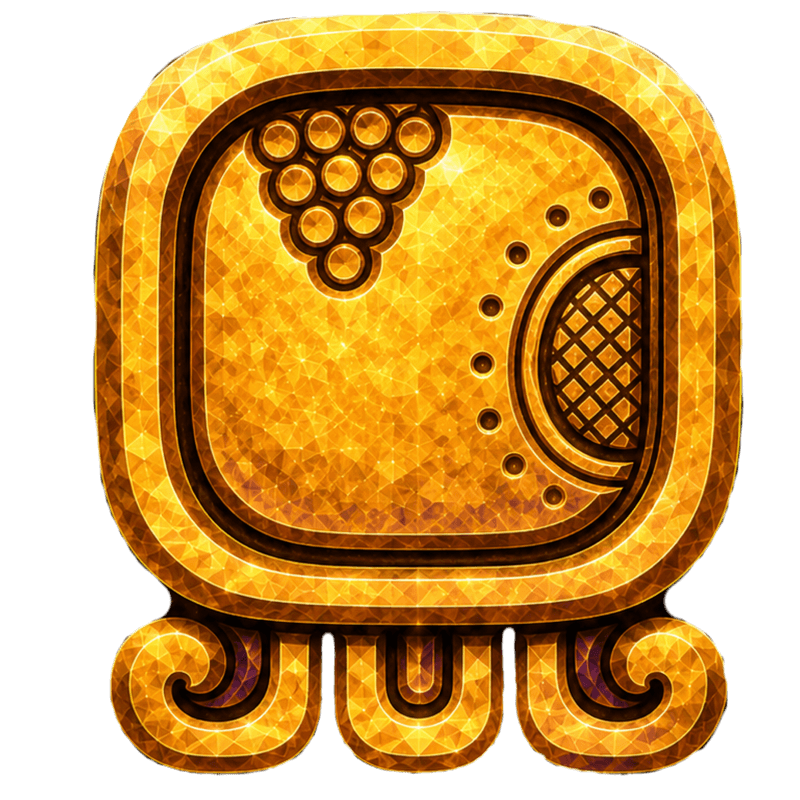
Nawal Kawoq
Storm / Rain · Community, the midwife, abundance through care.
Nawal Kawoq is day sign 19 of 20 in the traditional 260-day Maya Cholq'ij calendar kept by Ajq'ijab in Guatemala. Its Yucatec or Classic counterpart is Kawak. It is associated with storm / rain, and its central meaning is: The storm, the family, fertility of the rain. Community, the midwife, abundance through care.
You carry the energy of the storm: the sudden, the revelatory, the deeply communal. Kawoq people often arrive in others' lives at moments of real change. You bring rain to dry places. You cannot always control the weather you bring, and you almost never arrive without effect. People remember when you came.
Your gifts are community-building, an instinct for midwifery in the metaphorical sense (you help things be born), and an abundance that flows when you are genuinely connected to the people around you. You are built for community. You do not thrive in isolation, and when you try, you become the contained storm, which is its own kind of damage.
The challenge for Kawoq is the chaos that comes with storm energy. Disruption can serve no one; intensity can exhaust the people you love. Structure is your ally, not your enemy. Ceremony, ritual, and containers give the storm a form. Learn to call the lightning deliberately rather than letting it land wherever it will.
What does Nawal Kawoq mean?
Nawal Kawoq, also searched as Kawak, is the Maya Cholq'ij day-sign associated with storm / rain. In short: The storm, the family, fertility of the rain. Community, the midwife, abundance through care.
| K'iche' name | Kawoq |
|---|---|
| Yucatec / public variant | Kawak |
| Common searches | Kawoq, Kawoq, Kawak, kawoq, Maya nawal, Mayan nawal, nawal maya, nahual, nahual maya, Mayan day sign, Maya birth sign |
| Find your date | Use the Maya nawal calculator |
Your nawal is only half of a Cholq'ij day. Each sign is carried by a number from 1 to 13 that changes its intensity and timing. Learn how the 13 numbers work, or find your own nawal and number.
Go deeper: the documented teaching
Essence
Kawoq is the nawal of community, family, and gathered wisdom in the Maya Tzolk'in calendar. In K'iche' tradition it carries the energy of thunder, ants, woman, prosperity on earth, project success, healing, and sensitivity to what is coming. This first-pass node uses the Komon Tohil K'iche' daykeeper source as the primary meaning source and keeps Yucatec/Classic mapping separate from Dreamspell seal language.
Strengths
- Project support, communal prosperity, judgment, and sensitivity to what is coming.
- Carries a Traditional day/nawal meaning that can be combined later with a 1-13 number coefficient.
Shadow
- Healing and prediction language must be kept symbolic and cultural, not medical advice.
- Overstating this as a universal Maya personality doctrine would exceed the current source boundary.
Path
Bring thunder into service of community repair and practical success. In runtime synthesis, the day/nawal should carry the core Traditional meaning while the coefficient modifies intensity or timing.
Where the tradition diverges
K'iche' name: Kawoq. Yucatec/Classic-public mapping: Kawak. English gloss/source field: thunder, ants, woman. Dreamspell uses a separate seal label for the same index and should not supply this node's meaning. Komon Tohil presents day meanings in a B'atz'-first table; GMT calculation may use an Imix/Imox-first internal sequence.
What does Kawoq mean in the Maya calendar?
Kawoq is the nineteenth day sign in the traditional K'iche' Cholq'ij cycle of 260 days. The name is often rendered as "Kawak" in Yucatec sources and points to the same root cluster: thunder, rain, and the electric force that precedes abundance. Daykeeper tradition associates Kawoq days with collective endeavor, family bonds, and the kind of prosperity that grows when people work together rather than alone. The ants in its glyph cluster are not accidental: they are the original model of coordinated community labor in Mesoamerican symbolism.
The 1-13 tone coefficient paired with Kawoq modifies how that collective energy expresses itself. A 1 Kawoq (Junkawoq) day is considered a seed moment for community projects or family decisions; a 13 Kawoq (Oxlajuj Kawoq) brings the full force of the cycle's accumulated wisdom to bear.
When is the next Kawoq day?
Kawoq appears once every 20 days in the 260-day Cholq'ij cycle. Use the Nawal Calculator to find the next Kawoq date from today's position in the current round. Because the Cholq'ij runs independently of the Gregorian year, Kawoq days in 2026 fall roughly every three weeks through the solar calendar.
Kawoq sits in the same directional and elemental grouping as Toj, another nawal of balance and reciprocity, and relates thematically to the communal repair energy also found in Aj, the nawal of the home and family pillar. To understand how day signs interact with the 13 tones, see the Tzolk'in Tones hub.
Kawoq days at the lake often surface in the cofradía calendar of Santiago Atitlán, where the Tz'utujil community maintains one of the most active ceremonial calendars in the Maya world. If you are visiting the lake around a Kawoq day, Santiago is worth the lancha ride.
Nawal Kawoq: frequently asked questions
What does Nawal Kawoq mean?
Kawoq (also written Kawak) is the Cholq'ij day sign of storm / Rain. The storm, the family, fertility of the rain. Community, the midwife, abundance through care.
What are people born on the day Kawoq like?
Those who carry Kawoq tend to embody storm / Rain: the storm, the family, fertility of the rain. It is a real strength, and it casts a real shadow of the same shape. The full portrait above shows how Kawoq tends to move through character, work and relationships.
Is Kawoq the same as Kawak?
Yes. Kawoq is the K'iche' Maya spelling kept by the Ajq'ijab (day keepers) of Lake Atitlán, while Kawak is a common variant you will see elsewhere. Both name the exact same day sign in the 260 day Cholq'ij count.
How do I know if Kawoq is my nawal?
Enter your birth date in the Maya nawal calculator. If your Cholq'ij day sign comes out as Kawoq, this is your nawal. You can also check today's nawal to see when Kawoq next comes around in the 260 day cycle.
Sources and further reading
This page synthesizes published academic and ethnographic scholarship. It presents the living K’iche’ tradition through documented sources, not as insider authority.
- Komon Tohil (K'iche' Day Keepers Collective), The Meaning of the Days
- Dr Diane Davies, The Maya Calendar Explained, Maya Archaeologist
- Barbara Tedlock, (1992), Time and the Highland Maya
Is Kawoq your nawal?
Enter your birth date to calculate your Cholq'ij sign, tone, and deep reading path.