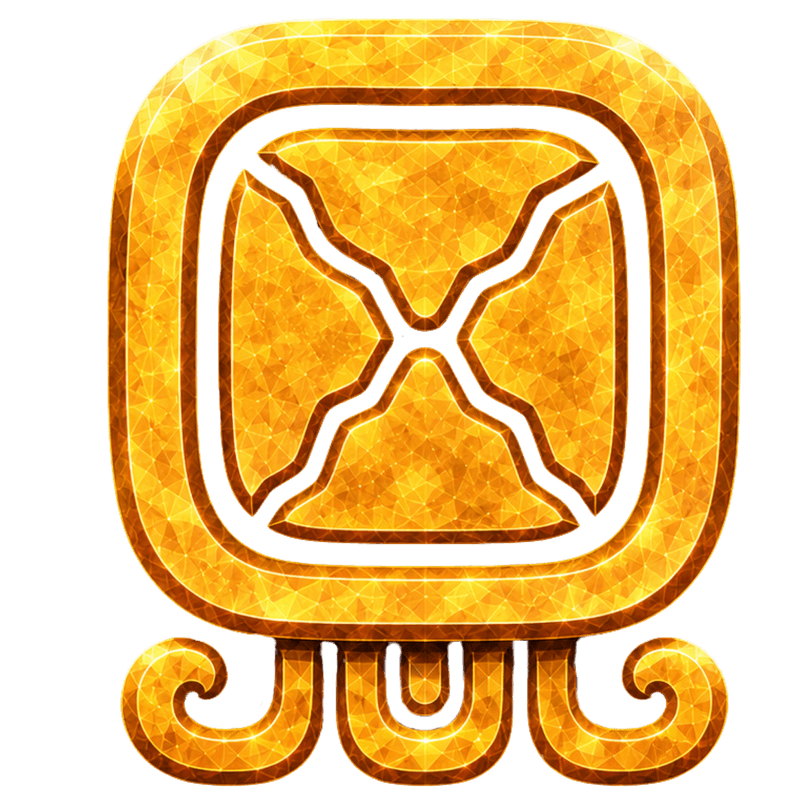
Nawal Tijax
Flint / Knife · Surgical truth, separating false from real.
Nawal Tijax is day sign 18 of 20 in the traditional 260-day Maya Cholq'ij calendar kept by Ajq'ijab in Guatemala. Its Yucatec or Classic counterpart is Etz'nab'. It is associated with flint / knife, and its central meaning is: The cutting edge, healing, the obsidian blade. Surgical truth, separating false from real.
You cut through. Tijax carries the energy of the obsidian blade: precise, sharp, capable of surgery. You have a gift for seeing what is real versus what is performed, and a low tolerance for self-deception, in yourself or anyone else. People feel this around you, sometimes before they know why.
Your gifts are truth-telling, the ability to heal by removing what does not belong, and a clarity that can be a genuine service to the people around you. At your best you are the person who says what everyone needed to hear but no one else was willing to say. This takes real courage and you have it.
The edge that heals can also wound. Tijax people can mistake sharpness for honesty, and cruelty for directness. Before you speak, ask: am I cutting to heal, or am I cutting because I can? The obsidian blade was used in ceremony, not in casual conversation. Know the difference. That distinction is the whole practice.
What does Nawal Tijax mean?
Nawal Tijax, also searched as Etz'nab', is the Maya Cholq'ij day-sign associated with flint / knife. In short: The cutting edge, healing, the obsidian blade. Surgical truth, separating false from real.
| K'iche' name | Tijax |
|---|---|
| Yucatec / public variant | Etz'nab' |
| Common searches | Tijax, Tijax, Etz'nab', tijax, Maya nawal, Mayan nawal, nawal maya, nahual, nahual maya, Mayan day sign, Maya birth sign |
| Find your date | Use the Maya nawal calculator |
Your nawal is only half of a Cholq'ij day. Each sign is carried by a number from 1 to 13 that changes its intensity and timing. Learn how the 13 numbers work, or find your own nawal and number.
Go deeper: the documented teaching
Essence
Tijax is the nawal of the obsidian blade: the flint knife that cuts cleanly, severs what is harmful, and serves as the instrument of surgical healing and protective ceremony in the Maya Tzolk'in calendar. Its full meaning cluster includes destiny, obsidian knife, and spontaneous temptation; it is used for protection from social, communal, or personal wrongdoing. This first-pass node uses the Komon Tohil K'iche' daykeeper source as the primary meaning source and keeps Yucatec/Classic mapping separate from Dreamspell seal language.
Strengths
- Bravery, healing, and the ability to cut toward protection.
- Carries a Traditional day/nawal meaning that can be combined later with a 1-13 number coefficient.
Shadow
- Irritability, gossip, arguments, and accidents are named risks in the source.
- Overstating this as a universal Maya personality doctrine would exceed the current source boundary.
Path
Use the blade for cleansing and protection, not escalation. In runtime synthesis, the day/nawal should carry the core Traditional meaning while the coefficient modifies intensity or timing.
Where the tradition diverges
K'iche' name: Tijax. Yucatec/Classic-public mapping: Etz'nab. English gloss/source field: obsidian knife, destiny. Dreamspell uses a separate seal label for the same index and should not supply this node's meaning. Komon Tohil presents day meanings in a B'atz'-first table; GMT calculation may use an Imix/Imox-first internal sequence.
What does nawal Tijax mean?
Tijax is the eighteenth day sign in the traditional Cholq'ij. Obsidian was the sharpest cutting material available in pre-Columbian Mesoamerica: the volcanic glass found throughout the highland Maya region (the Ixtepeque obsidian source in eastern Guatemala was one of the most significant trade nodes in the ancient network) was used for surgical blades, sacrificial instruments, and ritual protection objects. The Tijax nawal carries all of those functions at once: it can heal through precise cutting, and it can harm through careless or aggressive use of the same force.
Komon Tohil lists protection from social and communal wrongdoing as a central use of Tijax days. This is the blade functioning as a cleansing instrument: removing what has attached itself that does not belong, breaking negative cords of obligation or harmful social influence. The risks in its shadow (irritability, gossip, arguments) are the same blade energy leaking sideways rather than being directed with intention.
How does Tijax relate to other day signs?
Tijax follows No'j (wisdom, counsel, applied thought) and precedes Kawoq (community, thunder, gathered family). That sequence suggests: wisdom identifies what needs to be cut, the blade makes the clean cut, and then the community gathered around the result can begin to rebuild. Use the Nawal Calculator to find the next Tijax day in the current cycle. For how the 13 tones shape this blade energy, see the Tzolk'in Tones hub. Obsidian artifacts are visible in the collections at Santiago Atitlán's cultural museum and are a direct material link to the Tijax energy that has shaped highland Maya ceremonial life for millennia.
Nawal Tijax: frequently asked questions
What does Nawal Tijax mean?
Tijax (also written Etz'nab') is the Cholq'ij day sign of flint / Knife. The cutting edge, healing, the obsidian blade. Surgical truth, separating false from real.
What are people born on the day Tijax like?
Those who carry Tijax tend to embody flint / Knife: the cutting edge, healing, the obsidian blade. It is a real strength, and it casts a real shadow of the same shape. The full portrait above shows how Tijax tends to move through character, work and relationships.
Is Tijax the same as Etz'nab'?
Yes. Tijax is the K'iche' Maya spelling kept by the Ajq'ijab (day keepers) of Lake Atitlán, while Etz'nab' is a common variant you will see elsewhere. Both name the exact same day sign in the 260 day Cholq'ij count.
How do I know if Tijax is my nawal?
Enter your birth date in the Maya nawal calculator. If your Cholq'ij day sign comes out as Tijax, this is your nawal. You can also check today's nawal to see when Tijax next comes around in the 260 day cycle.
Sources and further reading
This page synthesizes published academic and ethnographic scholarship. It presents the living K’iche’ tradition through documented sources, not as insider authority.
- Komon Tohil (K'iche' Day Keepers Collective), The Meaning of the Days
- Dr Diane Davies, The Maya Calendar Explained, Maya Archaeologist
- Barbara Tedlock, (1992), Time and the Highland Maya
Is Tijax your nawal?
Enter your birth date to calculate your Cholq'ij sign, tone, and deep reading path.