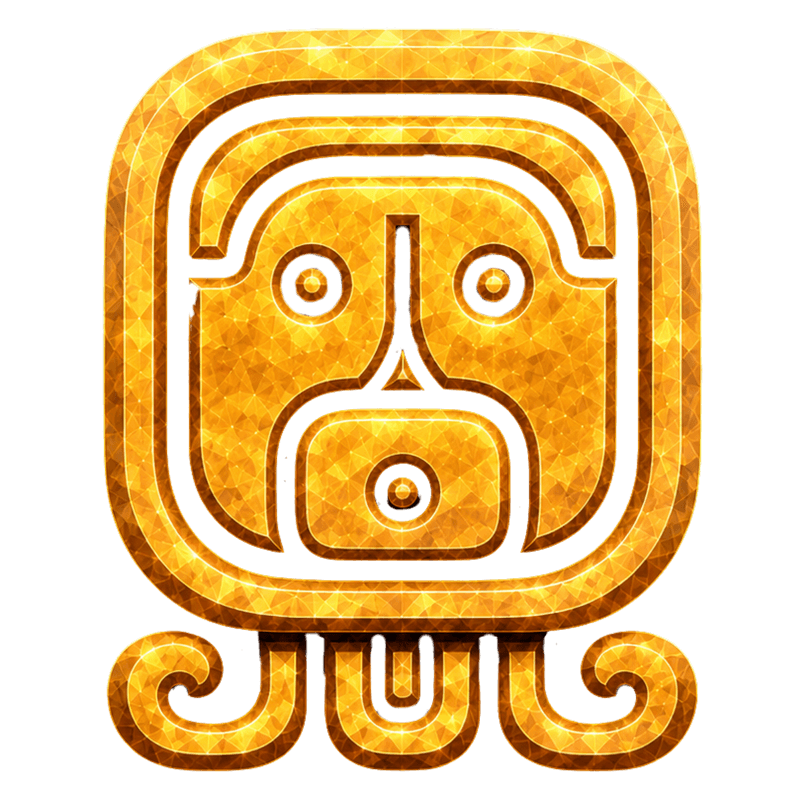
Nawal Ajpu
Sun / Lord · Light, mastery, completion, the radiant lord.
Nawal Ajpu is day sign 20 of 20 in the traditional 260-day Maya Cholq'ij calendar kept by Ajq'ijab in Guatemala. Its Yucatec or Classic counterpart is Ajaw. It is associated with sun / lord, and its central meaning is: The sun, the hero twin, victory. Light, mastery, completion, the radiant lord.
You are built to complete. Ajpu carries the energy of the hero twin: the one who enters the underworld, faces what is there, and returns. You know something about trials. You have likely already survived things that would have stopped others, and this has given you a quality of presence that people feel without being able to explain it.
Your gifts are mastery, radiance, and the ability to achieve what you set out to achieve when you are aligned with your purpose. You lead by example rather than by position. Your light is genuine. It costs you something to maintain, and that cost is what makes it real. People are drawn to you because they can sense the difference between earned presence and performed confidence.
The challenge for Ajpu is the ego that comes with light: the assumption that your path is the path, that your vision is the vision. The hero twin succeeds through ingenuity and genuine humility, not through dominance. The light that illuminates serves. The light that dazzles burns. Be the light that illuminates.
What does Nawal Ajpu mean?
Nawal Ajpu, also searched as Ajaw, is the Maya Cholq'ij day-sign associated with sun / lord. In short: The sun, the hero twin, victory. Light, mastery, completion, the radiant lord.
| K'iche' name | Ajpu |
|---|---|
| Yucatec / public variant | Ajaw |
| Common searches | Ajpu, Ajpu, Ajaw, ajpu, Maya nawal, Mayan nawal, nawal maya, nahual, nahual maya, Mayan day sign, Maya birth sign |
| Find your date | Use the Maya nawal calculator |
Your nawal is only half of a Cholq'ij day. Each sign is carried by a number from 1 to 13 that changes its intensity and timing. Learn how the 13 numbers work, or find your own nawal and number.
Go deeper: the documented teaching
Essence
Ajpu is the nawal of the Sun Lord, the blowgunner-hero of the Popol Vuh, and the force of destiny made conscious in the Maya Tzolk'in calendar. Its meaning cluster includes life, destiny, plants, animals, Lord Sun, hunter, marksman, and walker. This first-pass node uses the Komon Tohil K'iche' daykeeper source as the primary meaning source and keeps Yucatec/Classic mapping separate from Dreamspell seal language.
Strengths
- Talent, affection, skillful aim, and the capacity to help community ideas find fulfillment.
- Carries a Traditional day/nawal meaning that can be combined later with a 1-13 number coefficient.
Shadow
- Hot temper and judgment can burn what the Sun is meant to clarify.
- Overstating this as a universal Maya personality doctrine would exceed the current source boundary.
Path
Aim the light carefully; fulfillment requires warmth and discernment. In runtime synthesis, the day/nawal should carry the core Traditional meaning while the coefficient modifies intensity or timing.
Where the tradition diverges
K'iche' name: Ajpu. Yucatec/Classic-public mapping: Ajaw. English gloss/source field: life, destiny, sun lord. Dreamspell uses a separate seal label for the same index and should not supply this node's meaning. Komon Tohil presents day meanings in a B'atz'-first table; GMT calculation may use an Imix/Imox-first internal sequence.
What does Ajaw mean in Maya?
Ajaw (the Yucatec/Classic form of the name) means "lord" or "ruler" and is one of the most significant words in the Maya political and cosmological lexicon. It appears in Classic-period epigraphy across lowland Maya sites as the title for kings, used in the same sense as "lord of the sun" or "sun-lord." In the K'iche' calendar tradition the day is called Ajpu (or Hunahpu in older transcriptions, notably the hero twin of the Popol Vuh). Ajaw and Ajpu are the same day sign at the same position in the 260-day cycle; the difference is purely linguistic, not calendrical.
As a nawal, Ajpu/Ajaw carries the blowgunner's precision: the capacity to aim and strike true over great distance. Talent without direction wastes itself; Ajpu days favor those who have done the internal work of knowing what they are actually aiming at. The same Sun-force that brings clarity can burn if it moves through a mind that has not clarified its own motives.
How does Ajpu relate to the calendar and other nawales?
Ajpu is the twentieth and final day sign in the traditional Cholq'ij, making it the culmination of each round before Imox begins the next cycle. It follows Kawaq/Kawoq (community thunder, gathered wisdom) and precedes Imox (water, intuition, the beginning). That position at the end and the threshold is significant: Ajpu gathers the sun-force of a completed cycle before passing it back into the formless waters.
Use the Nawal Calculator to find the next Ajpu day in the current round. For how tonal coefficients (1 through 13) shape this final day sign's expression, see the Tzolk'in Tones hub. The solar symbolism of Ajpu is directly visible at the lake: from Santiago Atitlán, the silhouette of Volcán Atitlán at sunrise is one of the most striking expressions of Lord Sun's arrival that you can find anywhere in the Maya world.
Nawal Ajpu: frequently asked questions
What does Nawal Ajpu mean?
Ajpu (also written Ajaw) is the Cholq'ij day sign of sun / Lord. The sun, the hero twin, victory. Light, mastery, completion, the radiant lord.
What are people born on the day Ajpu like?
Those who carry Ajpu tend to embody sun / Lord: the sun, the hero twin, victory. It is a real strength, and it casts a real shadow of the same shape. The full portrait above shows how Ajpu tends to move through character, work and relationships.
Is Ajpu the same as Ajaw?
Yes. Ajpu is the K'iche' Maya spelling kept by the Ajq'ijab (day keepers) of Lake Atitlán, while Ajaw is a common variant you will see elsewhere. Both name the exact same day sign in the 260 day Cholq'ij count.
How do I know if Ajpu is my nawal?
Enter your birth date in the Maya nawal calculator. If your Cholq'ij day sign comes out as Ajpu, this is your nawal. You can also check today's nawal to see when Ajpu next comes around in the 260 day cycle.
Sources and further reading
This page synthesizes published academic and ethnographic scholarship. It presents the living K’iche’ tradition through documented sources, not as insider authority.
- Komon Tohil (K'iche' Day Keepers Collective), The Meaning of the Days
- Dr Diane Davies, The Maya Calendar Explained, Maya Archaeologist
- Barbara Tedlock, (1992), Time and the Highland Maya
Is Ajpu your nawal?
Enter your birth date to calculate your Cholq'ij sign, tone, and deep reading path.