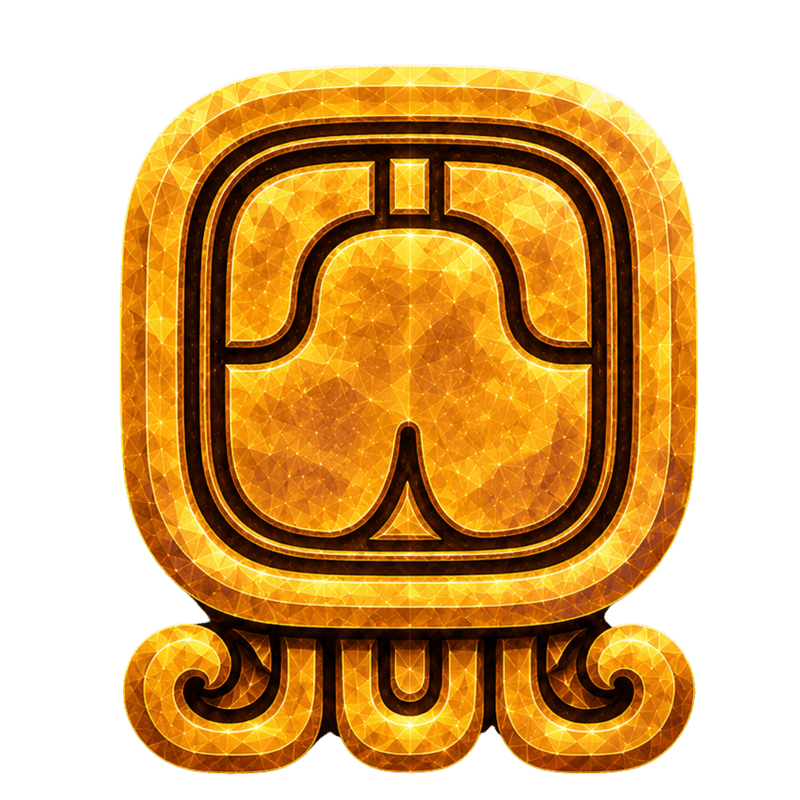
Nawal Ajmaq
Vulture / Wisdom · Pardoning, ancestral wisdom, owning our past.
Nawal Ajmaq is day sign 16 of 20 in the traditional 260-day Maya Cholq'ij calendar kept by Ajq'ijab in Guatemala. Its Yucatec or Classic counterpart is Kib'. It is associated with vulture / wisdom, and its central meaning is: The forgiveness day, the ancestor return. Pardoning, ancestral wisdom, owning our past.
You carry the weight of history: personal, familial, sometimes ancestral. Ajmaq people are deep processors. You are wired to examine, review, and account for what has happened. This gives you unusual wisdom, often earlier than your years would suggest, and it costs you an unusual amount of energy to carry.
Your gifts are perspective, the capacity for genuine forgiveness when you allow it, and the ability to see clearly what others are still avoiding. You are an elder in spirit even when young. You can hold complexity without needing to simplify it. When you do the real work of releasing the past, you become one of the freest people in any room.
The practice for Ajmaq is forgiveness as a daily discipline, not a single event. You have a deep tendency to hold the record: your own errors, others' failures, the accounting of what was and should not have been. Letting go is not condoning. It is choosing not to carry the past into every new moment. The owl sees at night because it is not weighed down by the day.
What does Nawal Ajmaq mean?
Nawal Ajmaq, also searched as Kib', is the Maya Cholq'ij day-sign associated with vulture / wisdom. In short: The forgiveness day, the ancestor return. Pardoning, ancestral wisdom, owning our past.
| K'iche' name | Ajmaq |
|---|---|
| Yucatec / public variant | Kib' |
| Common searches | Ajmaq, Ajmaq, Kib', ajmaq, Maya nawal, Mayan nawal, nawal maya, nahual, nahual maya, Mayan day sign, Maya birth sign |
| Find your date | Use the Maya nawal calculator |
Your nawal is only half of a Cholq'ij day. Each sign is carried by a number from 1 to 13 that changes its intensity and timing. Learn how the 13 numbers work, or find your own nawal and number.
Go deeper: the documented teaching
Essence
Ajmaq is linked with will, preventing mistakes, and giving thanks for physical and material well-being. This first-pass node uses the Komon Tohil K'iche' daykeeper source as the primary meaning source and keeps Yucatec/Classic mapping separate from Dreamspell seal language.
Strengths
- Bravery, correction, and communal gratitude.
- Carries a Traditional day/nawal meaning that can be combined later with a 1-13 number coefficient.
Shadow
- Temper can turn the will into error instead of preventing it.
- Overstating this as a universal Maya personality doctrine would exceed the current source boundary.
Path
Use will to repair, thank, and prevent harm before it hardens. In runtime synthesis, the day/nawal should carry the core Traditional meaning while the coefficient modifies intensity or timing.
Where the tradition diverges
K'iche' name: Ajmaq. Yucatec/Classic-public mapping: Kib. English gloss/source field: will, mistakes, thanks. Dreamspell uses a separate seal label for the same index and should not supply this node's meaning. Komon Tohil presents day meanings in a B'atz'-first table; GMT calculation may use an Imix/Imox-first internal sequence.
Nawal Ajmaq: frequently asked questions
What does Nawal Ajmaq mean?
Ajmaq (also written Kib') is the Cholq'ij day sign of vulture / Wisdom. The forgiveness day, the ancestor return. Pardoning, ancestral wisdom, owning our past.
What are people born on the day Ajmaq like?
Those who carry Ajmaq tend to embody vulture / Wisdom: the forgiveness day, the ancestor return. It is a real strength, and it casts a real shadow of the same shape. The full portrait above shows how Ajmaq tends to move through character, work and relationships.
Is Ajmaq the same as Kib'?
Yes. Ajmaq is the K'iche' Maya spelling kept by the Ajq'ijab (day keepers) of Lake Atitlán, while Kib' is a common variant you will see elsewhere. Both name the exact same day sign in the 260 day Cholq'ij count.
How do I know if Ajmaq is my nawal?
Enter your birth date in the Maya nawal calculator. If your Cholq'ij day sign comes out as Ajmaq, this is your nawal. You can also check today's nawal to see when Ajmaq next comes around in the 260 day cycle.
Sources and further reading
This page synthesizes published academic and ethnographic scholarship. It presents the living K’iche’ tradition through documented sources, not as insider authority.
- Komon Tohil (K'iche' Day Keepers Collective), The Meaning of the Days
- Dr Diane Davies, The Maya Calendar Explained, Maya Archaeologist
- Barbara Tedlock, (1992), Time and the Highland Maya
Is Ajmaq your nawal?
Enter your birth date to calculate your Cholq'ij sign, tone, and deep reading path.