How public boats actually work.
Public lanchas at Lake Atitlán do not run on a fixed ferry schedule. They leave when they are full, the typical wait at a main dock is under 15 minutes, and the real fare depends on who is paying. This page covers Panajachel to San Pedro, San Marcos, San Juan, Santiago, private boats, last boats, and real lancha prices.
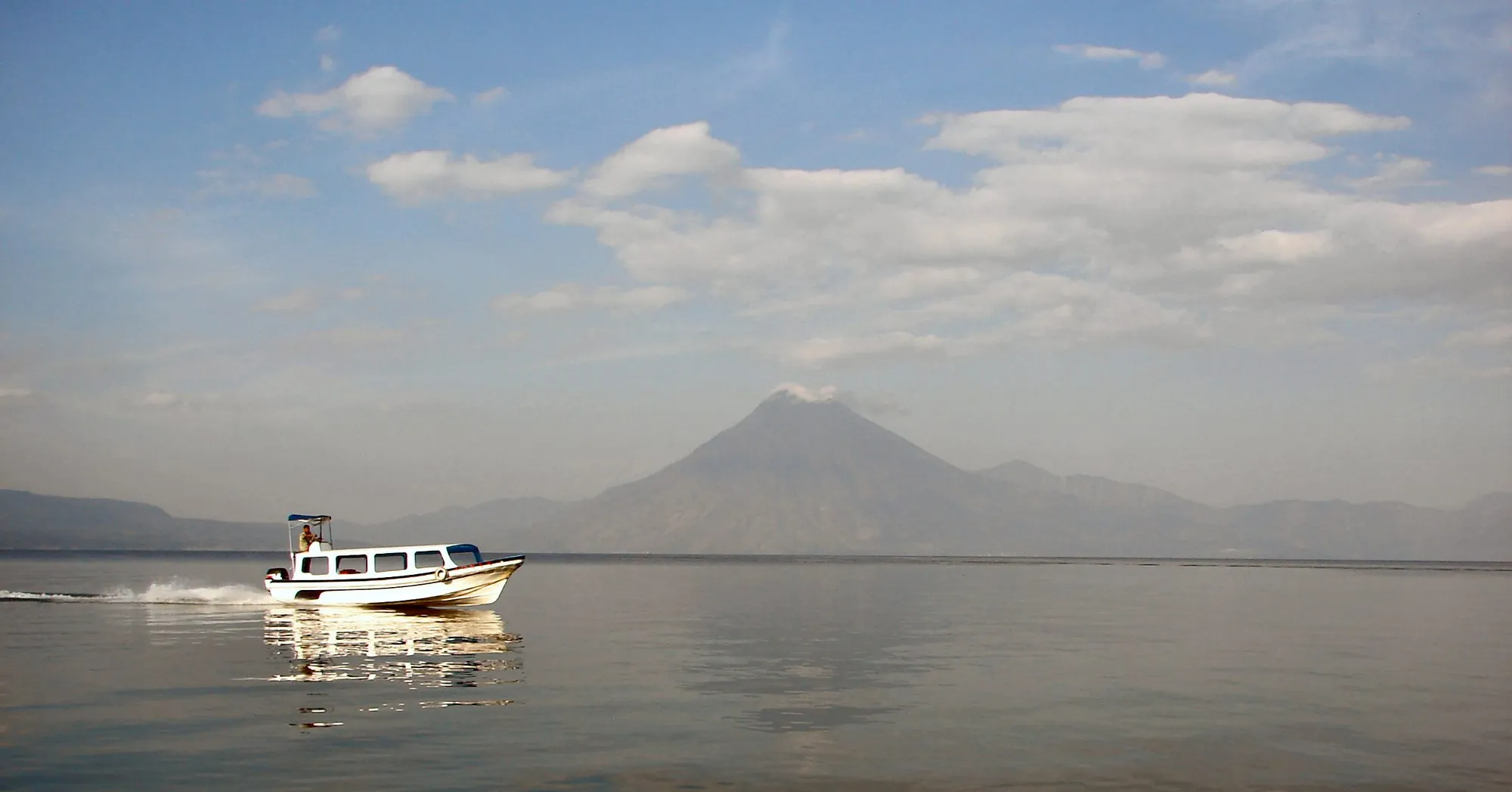
How the public lanchas work
Lake Atitlan public boats do not run on a fixed ferry schedule. Lanchas leave when enough passengers board, usually every 10 to 20 minutes on the main Panajachel to San Pedro line during daylight. Service is strongest from about 6 AM to 5:30 or 6 PM, with earlier wind-downs in rain.
There is no printed timetable. Public lanchas (colectivo boats) leave the main docks at Panajachel, San Pedro, San Marcos, and Santiago as soon as enough passengers are on board. During daylight hours the wait at a main dock is rarely more than 15 minutes. Smaller stops like Tzununá and Jaibalito are slower because not every boat calls there.
Boats run roughly from sunrise until about 6 PM in dry season (November to April) and wind down an hour earlier in rainy season (May to October). The eastern shore towns (Santa Catarina Palopó, San Antonio Palopó, San Lucas Tolimán) use a separate, less frequent operator and most travelers reach those towns by road.
Lake Atitlan lancha routes from Panajachel
The main visitor route runs from Panajachel west to Santa Cruz, Jaibalito, Tzununa, San Marcos, San Juan, and San Pedro. Panajachel to San Pedro usually takes 45 to 60 minutes. Panajachel to San Marcos takes 25 to 35 minutes. Panajachel to Santiago is a separate cross-lake route.
Most visitors start at the Panajachel dock and ask for a boat schedule. The useful answer is a route map plus realistic wait times: show up during daylight, ask for your destination, and board the next boat heading that way.
What it actually costs
On the long cross-lake run from San Pedro to Panajachel, Q25 per person is the standard tourist fare. On shorter hops like San Pedro to San Marcos or San Pedro to Tzununa, captains usually ask Q25 but Q15 is the fair price a tourist can often pay. Long-term residents pay less, and private boats after hours commonly cost several hundred quetzales for the whole boat. Pay in cash and carry small bills. Lancha fares confirmed accurate as of December 2025.
Fares are paid in cash quetzales, per person, one way. What is fair depends on the route and on who is paying:
- San Pedro to Panajachel (long cross-lake run): Q25 per person is the standard, correct tourist fare for this long route. This is the normal price, not an overcharge.
- Shorter hops (San Pedro to San Marcos or San Pedro to Tzununa): captains will typically ask for Q25 first, but Q15 is the fair price a tourist can often pay. Offer Q15 politely on these shorter hops.
- Locals and long-term residents: Guatemalans who ride the boats regularly, and expats who live at the lake and know the system, pay less than the tourist fare. This is the resident reference, not the price a visitor should expect to be quoted.
The point is to know the fair price so you are not overcharged, not to underpay. On the long San Pedro to Panajachel run, Q25 is correct. On the short hops, have Q15 ready in exact change, hand it to the boat owner directly as you step off, and offer it politely. Arguing the fare after you are on the water never works.
A few very short hops between neighboring towns (for example San Marcos to Tzununá) can be posted lower. Confirm before boarding when in doubt. Lancha fares confirmed accurate as of December 2025.
Practical tips for the dock
- Have exact change. The boat owner cannot make change for a Q200 bill at the dock and the conversation gets awkward fast. Bring small bills.
- Pay the owner directly. Hand the cash to the person actually running the boat, usually the captain or his deputy. Not to a fixer on the dock.
- Confirm the destination before boarding. Some boats only run partial routes or skip certain stops. Say the destination out loud and get a nod.
- Mornings are reliable, late afternoons are not. If you have a connecting shuttle or a flight, take the lake crossing in the morning. Afternoon rain and wind cancel runs.
- Wear the life jacket in rough water. They are under the bench. Most passengers ignore them. If the lake is choppy, put one on.
- Cross-lake routes are scarcer. Panajachel to Santiago and San Pedro to Santiago run less often than the main west-shore arc. Allow extra waiting time.
Private boats and custom day trips
Any lancha can be hired as a private boat (lancha privada) for a one-time trip, a multi-stop tour, or a full day of charter use. The asking price on the dock can be high and varies by operator. We help arrange private boats at a fair price with vetted captains who know the route you want, including:
- Full day private hire to go anywhere on the lake at your own pace.
- One-way town to town when no public boat is leaving soon.
- Round trip with a wait time at the destination.
- Lake tours that loop the perimeter with stops at multiple towns, swim spots, or sunset viewpoints.
- Early or after-hours transfers when public boats are not running.
Use the charter request form below. Tell us when, how many people, and what you want to do. We come back with options and a confirmed price within a day.
Direct booking for both private and public lancha runs through Colibri is coming soon, so you will eventually be able to reserve a boat online instead of negotiating dock-side.
Request a private or custom boat
Better price than asking on the dock. Click to expand.
Request a private or custom boat
Better price than asking on the dock. Click to expand.
We will help you arrange a private or shared lancha at a fair price. Fill this out and we will get back to you with options and a confirmed quote.
Route lines and how locals name them
Local Spanish-language sources and residents use a color-coded route terminology that is useful to know. The Orange Line runs west from Panajachel through Santa Cruz, Jaibalito, Tzununá, San Marcos, San Juan, and terminates at San Pedro. The Green Line runs south from Panajachel directly to Santiago Atitlán. The Red Line connects San Pedro to Santiago. These are informal names, not official designations, but boat crews recognize them. When asking which boat to board, saying the name of your destination is always clearer than trying to describe a route.
The Asociación de Lancheros San Juan Bautista operates the Panajachel to San Juan La Laguna route and posts a fare of Q25 per person on the municipal website of San Juan La Laguna (sanjuanlalaguna.com.gt). This is one of the few officially documented fares; most prices are set informally at the dock.
What to do if you miss the last boat
Missing the last public lancha is a genuine inconvenience, not a crisis, but it requires a decision quickly. Your options:
- Hire a private boat. Captains at any dock will take you as a private passenger after public service ends. Expect to pay Q300 to Q500 for the whole boat, regardless of destination. This is the fastest option.
- Sleep in the town you are in. Every main lakeside town has guesthouses. Showing up without a reservation is normal and usually works.
- Road access. If the town you are stranded in has road access (Panajachel, San Pedro, San Juan, Santiago), you can take a tuk-tuk or taxi on the road. The road around the lake is not a complete loop, so confirm routing before you commit to a tuk-tuk.
- Wait for dawn. If you are in Santa Cruz, Jaibalito, or Tzununá (boat-only towns), you will need to wait until the first boats run at sunrise. Most guesthouses in these towns are accommodating to guests who arrive this way.
Lancha safety: what actually matters
The Xocomil wind is the main hazard on the lake. The word comes from Kaqchikel and roughly translates as "the wind that carries away sins." It rises predictably in the early afternoon during the rainy season (May to October) and can turn a calm crossing into a rough one within 20 minutes.
Practical Xocomil rules: take morning boats if you have any timing flexibility; if you are already on the water when it comes up, sit low in the center of the boat, not on the bow; if a captain proposes to cross with an overloaded boat in rough water, wait for the next one or negotiate a lighter load. Life jackets are stored under the bench seats. Putting one on in rough water is not unusual and the crew will not object.
Lanchas have an excellent overall safety record. The risks are real but manageable with basic judgment.
Frequently asked questions
Frequently asked questions
Do lanchas run on a fixed schedule at Lake Atitlán?
No. There is no printed timetable and the boats do not leave at set times. Lanchas at the main town docks fill up and leave when they have enough passengers. In practice this means showing up at the dock and waiting. The longest typical wait is around 15 minutes during daylight hours. Boats run roughly from sunrise until about 6 PM in dry season and a bit earlier in rainy season.
How much does a lancha actually cost at Lake Atitlán?
It depends on the route and on who is paying, in cash quetzales, one way, per person. On the long cross-lake run from San Pedro to Panajachel, Q25 is the normal, correct tourist fare. On shorter hops like San Pedro to San Marcos or San Pedro to Tzununa, captains usually ask Q25 first, but Q15 is the fair price a tourist can often pay, so offer Q15 politely on those short hops. Locals and long-term residents who know the system pay less. Have the exact amount ready before you board, hand it to the boat owner directly, and there is rarely friction. Lancha fares confirmed accurate as of December 2025.
How long do I wait for a lancha at the dock?
At the busy main docks (Panajachel, San Pedro, San Marcos, Santiago) the wait is rarely more than 15 minutes during daylight. Boats are constantly arriving, dropping off, and loading up. At smaller stops like Tzununá or Jaibalito the wait can be longer because not every boat calls there. Late in the day the system thins out and you may wait 30 minutes or more for the last few departures.
Can I get a private boat for the day?
Yes. You can hire any lancha as a private boat (lancha privada) for a one-time trip, a multi-stop tour, or a full day of charter use. Asking on the dock typically gets you a high quote. Booking ahead through us gets you a confirmed price, a vetted operator, and a boat that knows the route you want. Use the charter request form on this page.
What is the last lancha of the day at Lake Atitlán?
There is no schedule, but in practice the last reliable public lanchas on the main Panajachel to San Pedro route leave around 5 PM to 6 PM in dry season and about an hour earlier in rainy season. Crossing the lake (San Pedro to Santiago, Panajachel to Santiago) winds down even earlier, often by 4:30 PM. If you miss the last public boat, your only options are to sleep where you are or hire a private water taxi for several hundred quetzales for the whole boat. Plan to be on the boat at least 90 minutes before sunset, especially if rain is moving in.
How do I get from Panajachel to San Marcos, San Juan, San Pedro, or Santiago by boat?
For Panajachel to San Marcos, San Juan, or San Pedro, use the main west-shore public lancha line from the Tzanjuyu dock. Boats leave when full throughout the day and usually stop at Santa Cruz, Jaibalito, Tzununa, San Marcos, San Juan, and San Pedro depending on the run. For Panajachel to Santiago Atitlan, use the separate Santiago boats from the same dock area; departures are less frequent and finish earlier.
Is there a Lake Atitlan ferry schedule?
Travelers often search for a ferry schedule, but Lake Atitlan does not have a formal ferry system. The public transport is a lancha network: small passenger boats that leave when enough people board. Treat all published schedules as approximate route guidance, not fixed departure times.
Should I bargain with the lancha driver?
It depends on the route. On the long San Pedro to Panajachel cross-lake run, Q25 is the correct tourist fare and there is nothing to negotiate. On shorter hops like San Pedro to San Marcos or San Pedro to Tzununa, captains usually ask Q25 first, but Q15 is a fair price you can often offer. If you live at the lake and ride the same route regularly, the price tends to settle even lower over time. Negotiate before the boat leaves and have exact change ready. Arguing about price after you are on the water never goes well.
Are lanchas safe?
Public lanchas are safe in normal conditions. Boats carry life jackets but most passengers do not wear them and there is no enforcement. The real risk is rough water in the afternoon, especially in rainy season when the Xocomil wind comes up. If the lake is choppy and a boat is overloaded, wait for the next one. The captain of an overloaded boat is making a calculation about money, not your safety.