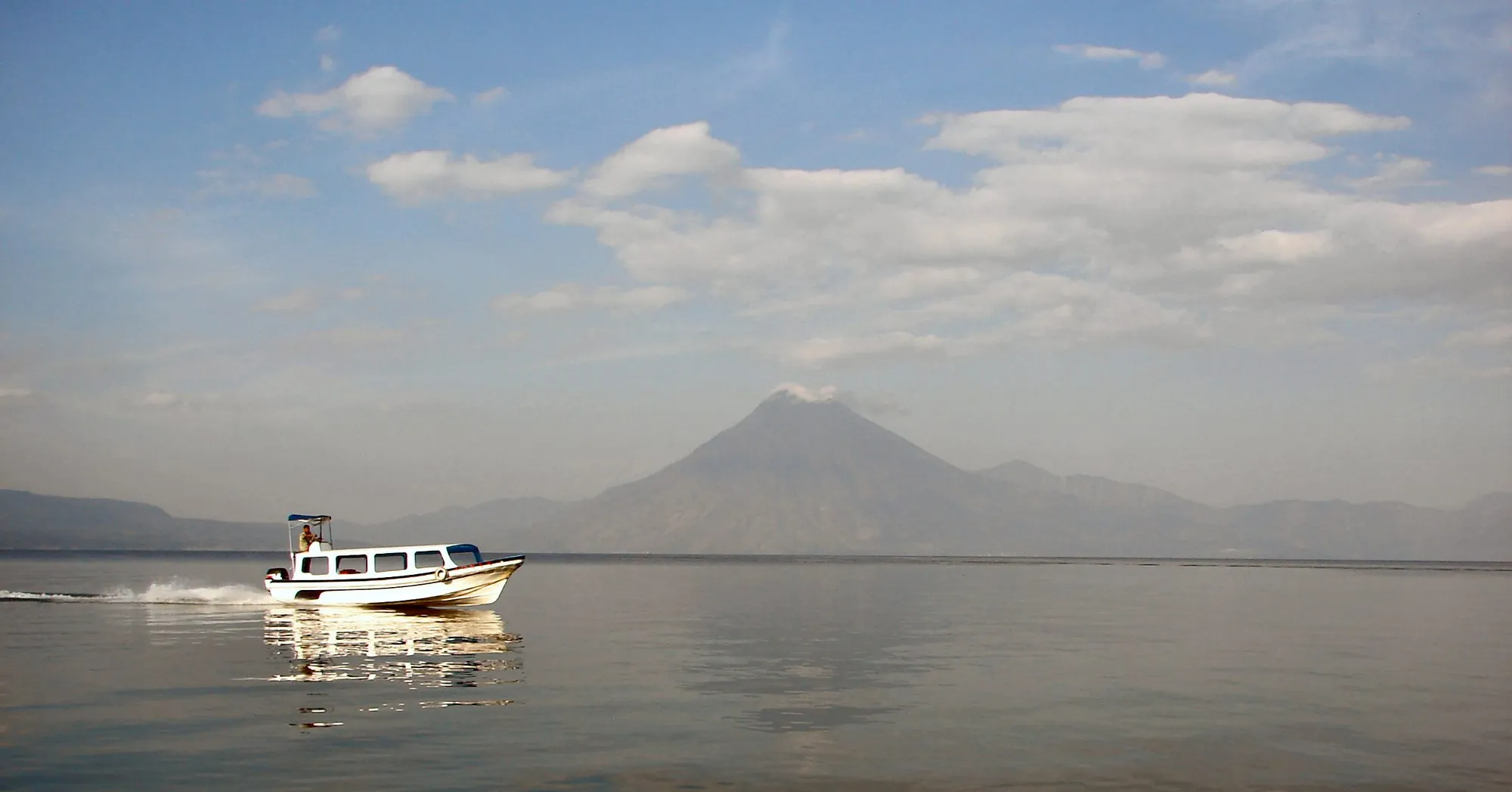
Lake Atitlan Lancha Guide 2026: Routes, Fares, Last Boat
Lake Atitlán lanchas run on demand rather than a fixed timetable, departing roughly every 15 to 30 minutes during peak hours from about 6 a.m. until 5 or 5:30 p.m. Fares run Q10 to Q15 between neighboring villages and Q25 to Q35 from Panajachel to farther towns like San Pedro, San Juan or Santiago Atitlán, paid in cash only. Missing the last boat means an overnight stay, since villages like Jaibalito, Tzununa and Santa Cruz La Laguna have no road access at all.
Lake Atitlán's public lanchas have no fixed schedule and depart from Panajachel when full, typically every 15 to 30 minutes between roughly 6 a.m. and 5 to 5:30 p.m. A Panajachel to San Pedro La Laguna crossing costs Q25 to Q35 and takes 35 to 45 minutes with stops, or 15 to 20 minutes on the early morning express. Payment is cash only.
This guide covers routes, fares, schedules, the last-boat situation, and a few things that will save you time and frustration.
The Basic System
There are no fixed timetables posted at the docks. Instead, lanchas depart when they are full, or close to it, running on a rough schedule driven by demand. During peak hours (7 a.m. to 2 p.m.), boats leave frequently and you rarely wait more than 15 to 20 minutes at Panajachel's main dock.
Most lanchas are shared public boats carrying 10 to 20 passengers. Private lanchas are available for groups or for routes not served by the regular lines, at a significantly higher cost.
Panajachel, the lake's main tourist hub and transport gateway, is where most visitors begin. There are two practical public docks. The west and north shore boats for Santa Cruz, Jaibalito, Tzununa, San Marcos, San Juan, and San Pedro use the Calle del Embarcadero or Tzanjuyu dock area. The Santiago Atitlan crossing uses a separate dock at the end of Calle Rancho Grande.
The Main Routes
The North Shore Circuit
This is the workhorse route that loops around the lake's northern and western shore, connecting Panajachel to the string of villages on that side:
Panajachel, Santa Cruz La Laguna, Jaibalito, Tzununa, San Marcos La Laguna, San Pablo La Laguna, San Juan La Laguna, San Pedro La Laguna.
The full journey from Panajachel to San Pedro takes roughly 35 to 45 minutes with stops. Boats on this route depart Panajachel approximately every 20 to 30 minutes during busy periods. The return trip follows the same route in reverse.
The Express to San Pedro
Early morning only, roughly 6 a.m. to 8 a.m., there is a direct (non-stop) express boat between Panajachel and San Pedro La Laguna. It takes about 15 to 20 minutes versus the 40-minute ride with stops. If you need to catch an early bus or shuttle from San Pedro, this express is worth knowing about.
The Santiago Atitlán Crossing
Santiago Atitlán is the largest indigenous Maya town on the lake and sits on the south shore, directly across the water from Panajachel. It is served by its own direct crossing, not the north-shore circuit. The journey takes around 30 to 40 minutes. Santiago is the home of Maximón (also spelled Rilaj Mam), a syncretic deity and major cultural landmark, and well worth a day trip. See our Santiago Atitlán town guide for context before you go.
Smaller Inter-Town Hops
Once you are based in one of the villages, short hops between adjacent towns are common. A ride from San Pedro to San Juan, for example, takes 5 minutes and costs around Q10. Most inter-town hops on the north shore cost between Q10 and Q15.
Fares
There is no official public tariff posted by the boat cooperatives, so publishable fares have to be ranges. Prices also vary by local, resident, and tourist tiers. As a general 2025 to 2026 guideline:
- Panajachel to far towns such as San Pedro, San Marcos, San Juan, or Santiago Atitlan: roughly Q25, sometimes up to Q35
- Panajachel to nearer west-shore villages such as Santa Cruz, Jaibalito, or Tzununa: roughly Q10 to Q20
- Short inter-town rides (adjacent villages): Q10 to Q15
- Private lancha (full boat, any route): Q200 to Q500 depending on distance and negotiation
Pay in cash. Boats do not accept cards or mobile payments. Carry small bills, as change is not always available at the dock. You typically pay when you board or when you arrive, depending on the boat.
A useful benchmark: no shared one-way journey should cost more than Q35 for tourists. If you are quoted significantly more, you can negotiate or wait for the next boat where the crew may be more flexible.
Schedule and Last Boats
West-shore service runs roughly from the first boats around 6 to 6:30 a.m. until about 5 to 5:30 p.m., with departures every 15 to 30 minutes during the busy part of the day. The Santiago route starts later, runs less frequently, and can wind down earlier. Do not rely on any public boat after about 5 p.m.; for Santiago, confirm locally because service may end closer to 4:30 to 5 p.m.
This is critical: if you miss the last boat, you are spending the night. Several villages on the lake, including Jaibalito, Tzununa, and Santa Cruz La Laguna, have no road access at all. Others are technically reachable by road but the route is steep, unpaved, and impractical at night without a vehicle.
Build a buffer into your afternoon plans. If you want to take the last boat back to Panajachel, aim to be at the dock of your village by 5 p.m. and verify locally what time the last boat leaves that day.
For a live lancha schedule tool, see our lancha schedule page.
The Xocomil Afternoon Wind
The Xocomil is a strong afternoon wind that sweeps across the lake, typically picking up between noon and 1 p.m. and intensifying through the afternoon. On windy days, crossing the lake can become uncomfortable or outright rough.
Most experienced travelers on the lake handle this by crossing early. If you want to move between towns, mornings are reliably calmer. Afternoon crossings during high wind periods can involve significant wave action, and the small open lanchas offer no shelter.
If you see whitecaps on the lake, especially on the open water between Panajachel and Santiago, ask locals whether boats are still running before you commit to a crossing.
Practical Tips
Waterproof your valuables. Even on calm days, spray comes over the bow. Pack electronics and passports in a dry bag or ziplock before boarding. Backpacks stored on the roof of the lancha are especially exposed.
Arrive before departure. Boats leave when full, not on a strict schedule. Showing up 10 minutes early at a busy time of day usually means a shorter wait. Showing up right as a boat is pulling away is a guarantee of waiting for the next one.
Sitting on the roof. Some lanchas allow passengers to ride on top, and views are better from there. It is also wetter, bumpier, and exposes you to full sun. Your call.
Private lanchas. If you have a group of four or more, a private lancha to a specific destination may cost only slightly more than taking the public boat individually. Negotiate the price before boarding and confirm the exact destination with no extra stops. Online booking for both private and public lancha rides through Colibri is launching soon, which should make this negotiation optional.
Kids and motion sickness. The crossing from Panajachel to San Pedro is generally calm in the morning but can be rough in the afternoon. If anyone in your group is prone to motion sickness, plan your crossings for early in the day and sit toward the back of the boat where movement is lessened.
For complete transport options around the lake, including tuk-tuks, chicken buses, and private shuttles, visit our getting around guide.
Sources checked
Frequently asked questions
How much does the lancha cost on Lake Atitlan? Short hops between neighboring villages cost Q10 to Q15, while trips from Panajachel to farther towns like San Pedro or Santiago Atitlán cost Q25 to Q35. No shared one-way ride should cost tourists more than Q35.
What time is the last boat? West shore service runs until roughly 5 to 5:30 p.m.; the Santiago route can end earlier, around 4:30 to 5 p.m. Confirm locally, since missing the last boat means spending the night in that village.
Is there a direct express boat to San Pedro? Yes, an early morning non-stop express runs roughly 6 to 8 a.m., taking 15 to 20 minutes versus 35 to 45 minutes on the regular route with stops.
Leave a comment
Comments are reviewed before publishing.
See something to fix or add?
Goes straight to our editors. Not shown publicly.
Comments (0)
No comments yet. Be the first.