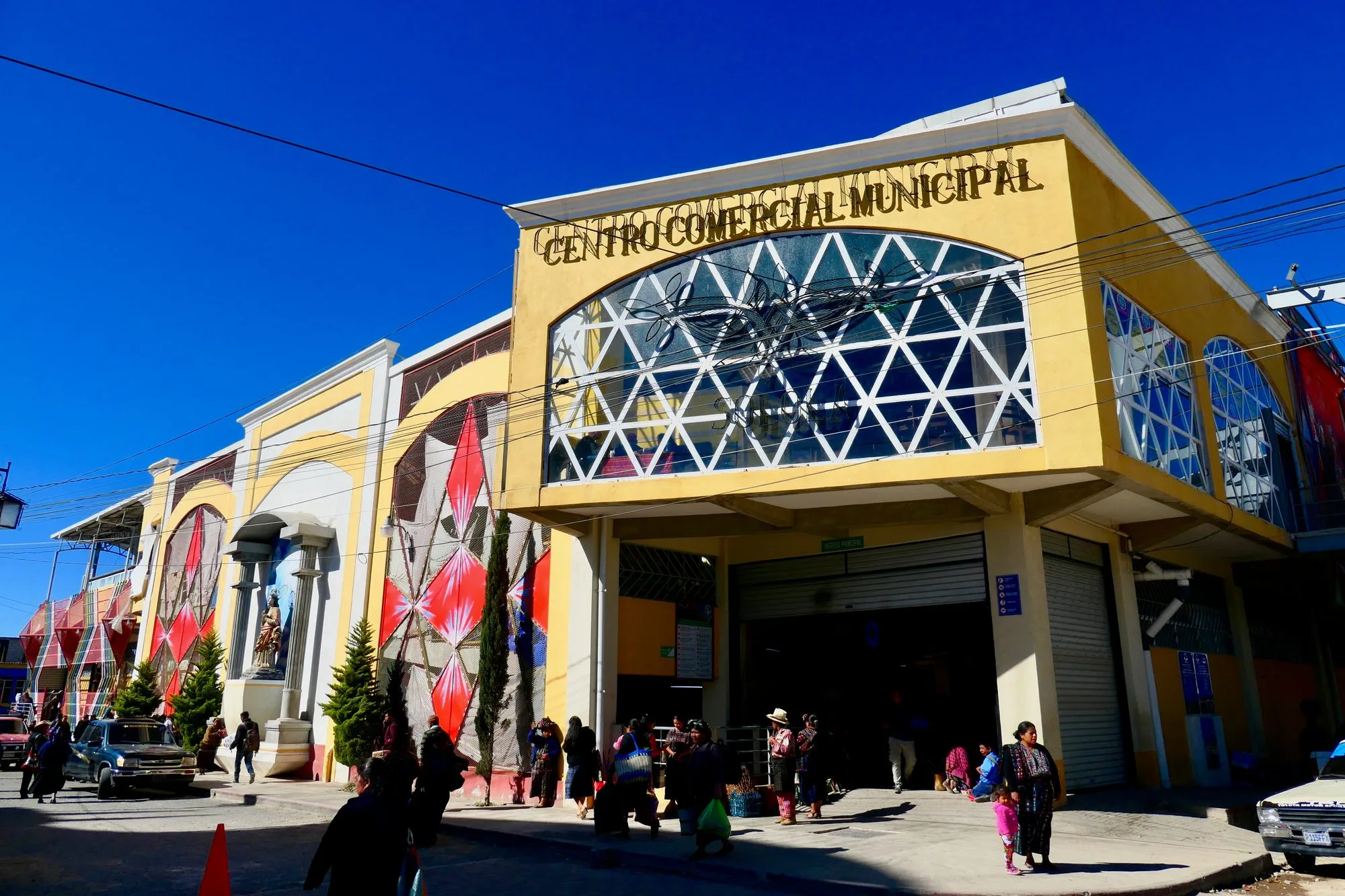
Sololá Market: Complete Visitor Guide
Standing at the Mercado Municipal de Sololá on a Tuesday or Friday morning, you are surrounded by living continuity. The women traders arrive in rainbow-colored huipiles (woven blouses) and striped skirts, their textiles varying by village according to traditions that predate the Spanish presence. The men who attend in traditional dress wear embroidered trousers, patterned shirts, and distinctive hats, making Sololá one of the few places in Guatemala where everyday male traditional dress remains common. The language you hear around you is Kaqchikel Maya. Spanish comes second.
Sololá was founded on October 30, 1547, and sits at 2,114 metres above sea level, roughly 600 metres above Lake Atitlán. From most lake towns, getting there takes about an hour. What you encounter when you arrive is a market tradition that stretches back to a Maya trade network that predates the city itself.
Market Days and Hours
The primary market days at the Mercado Municipal de Sololá are Tuesday and Friday. These are the days when vendors arrive from across the department and from neighboring departments, and when the full scale of the market is visible. A smaller daily market operates throughout the week, but it is a fraction of the Tuesday and Friday activity.
Vendors begin setting up before dawn on the primary market days. Reported hours are approximately 8:00 AM to 6:00 PM. The best time to visit is early morning on Tuesday or Friday, both for maximum vendor activity and to avoid the midday heat at altitude (though at 2,114 metres, Sololá is pleasantly cool compared to the lakeside towns).
No official published hours from the Municipalidad de Sololá were located in accessible online documents. The Tuesday and Friday schedule is consistent across all independent sources reviewed and aligns with the traditional highland market calendar observed across the Guatemalan altiplano.
Historical Background: 1547 to Present
Sololá's pre-Columbian name was Tz'olojya in Kaqchikel (sometimes rendered Tz'oloj Ya), later Hispanicized to Sololá. The city was founded on October 30, 1547, during the Spanish colonial period, on a site that had long served as a highland trading hub. Its position along ancient Maya trade routes connecting Pacific coastal lowlands with the highland plateau gave Sololá commercial importance before the Spanish arrived.
The Annals of the Cakchiquels (Kaqchikel), first written in 1571 by Francisco Hernandez Arana Xajila and completed by his grandson Francisco Diaz Gebuta Quej in 1604, provides the primary academic source for the pre-Columbian and early colonial history of the Kaqchikel people in the Sololá region. The manuscript was kept by the Xahil lineage in Sololá, discovered in the archives of the San Francisco de Guatemala convent in 1844, and describes Kaqchikel territorial history, cosmology, and the Spanish conquest from an indigenous perspective.
After Central American independence, Sololá was an original municipality and department head. In 1838 it briefly joined the ephemeral State of Los Altos before reincorporation into Guatemala in 1840. It was elevated to city status on October 30, 1924 (a century after the independence era, on the same date as its colonial founding). Population per the 2021 census: 99,934 across the municipality, with an urban population of 30,155.
The Mercado Municipal sits on the southwest corner of Parque Centro América, Sololá's central square.
Cultural Composition: A Kaqchikel City
Almost all residents of Sololá city are Kaqchikel Maya. The municipality also includes K'iche' Maya residents, particularly in the community of Argueta. The Kaqchikel people are one of the major Maya groups of the Guatemalan highlands, with a distinct language, textile tradition, and cultural calendar.
The cofradías (indigenous Catholic brotherhoods with Maya ceremonial functions) are one of Sololá's most visible cultural institutions. They parade through the town in ceremonial costumes, particularly on Sundays en route to Mass. If you visit on a Sunday, you may encounter this procession near the central square or church. Sololá is one of the few places in Guatemala where this blend of Maya and Catholic ceremonial life remains fully active in public space.
The Kaqchikel language uses the ALMG (Academia de Lenguas Mayas de Guatemala) standardized orthography, which you will see on signage around the market and municipal buildings. The ALMG orthography uses apostrophes to mark glottal stops and aspirated consonants, as in Tz'utujil, K'iche', and Kaqchikel.
What Is Sold at the Market
The Sololá market trades in a wide range of goods. On primary market days (Tuesday and Friday), the full scope includes:
- Textiles: Handwoven huipiles, cortes (wrap skirts), belts, and table linens from villages throughout the department. Each village has a distinct color palette and weaving pattern, making textiles a record of geographic origin.
- Fresh produce: Vegetables, fruits, dried beans, corn, chiles, herbs, and seeds from highland farms. The produce at altitude markets like Sololá includes varieties not common at lower elevations.
- Medicinal plants: Highland Maya herbal medicine traditions remain in active practice. Vendors sell dried plants, roots, and prepared preparations for traditional remedies.
- Pottery: Functional and decorative ceramics from regional workshops.
- Livestock: Animals (chickens, turkeys, pigs) are traded at the larger weekly markets, though trading arrangements may take place at the periphery.
- Household goods: Practical items ranging from rope and tools to plastic goods and kitchen equipment.
- Handcrafts: Wood carvings, masks, and woven goods made for both local use and visitor purchase.
The market also functions as a social gathering for traders who travel from distant communities. The economic and social activity of a Sololá market day extends well beyond the physical stalls.
Getting There from Lake Atitlán
The transit route from lake towns to Sololá is straightforward and inexpensive.
From Panajachel
Panajachel is the closest lake town to Sololá and the transit hub for visitors from the western and northern shores.
| Detail | Info |
|---|---|
| Route | Panajachel to Sololá (chicken bus) |
| Fare | Q3 per person (approx. USD $0.39) |
| Frequency | Approximately every 10 minutes, 4:00 AM to 6:00 PM |
| Duration | Approximately 20 minutes |
| Departure point | Near Calle Real and Calle Santander (ask locally for the current stop) |
From Other Lake Towns
From any other lake town, the journey begins with a lancha (water taxi) to Panajachel, then the bus to Sololá.
| Origin | Lancha to Panajachel | Bus to Sololá | Total approx. |
|---|---|---|---|
| San Pedro La Laguna | Q25-Q35, 30-40 min | Q3, 20 min | 60-90 min |
| San Marcos La Laguna | Q25-Q35, 20-30 min | Q3, 20 min | 50-70 min |
| Santiago Atitlán | Q25-Q35, 30-40 min | Q3, 20 min | 60-90 min |
Lanchas run from approximately 7:00 AM; the last boat back is around 7:00 PM. For a Tuesday or Friday market visit, aim to board the lancha no later than 7:30 to 8:00 AM to arrive at the market during peak morning activity.
To return, simply reverse the route: bus from Sololá back to Panajachel, then lancha to your home town.
Cultural Etiquette at the Market
No formal INGUAT or ALMG published etiquette guide specifically for the Sololá market was located during research. The following reflects general guidance applicable to indigenous markets and cultural spaces in the Guatemalan highlands.
Photography: Always ask permission before photographing individuals, particularly those in traditional dress. Many community members prefer not to be photographed; some will decline politely, some emphatically. A small purchase from a vendor before asking to photograph them is widely considered appropriate. Photographing ceremonial activity without permission is not appropriate.
Bargaining: The Sololá market is not a bargaining market in the tourist-attraction sense. Prices are generally set, and aggressive negotiation is considered disrespectful. If a price seems high, you can ask politely whether the price is firm, but be prepared to accept it or decline gracefully.
Language: Kaqchikel is the primary community language. Spanish is widely understood. Greeting vendors with a simple "buenos días" in Spanish is appreciated. Attempting even a few words in Kaqchikel (the greeting "Maltiox" for "thank you" is widely appreciated) signals respect for local culture.
Dress: Conservative dress (covered shoulders and knees) is appropriate out of respect for the predominantly Kaqchikel Catholic community. Sololá is a working city, not a tourist market, and dressing respectfully matters more here than in tourist-oriented contexts.
Buying directly: Purchasing directly from indigenous vendors and artisans keeps income within the community. The textiles at Sololá come from people who made them, not intermediary sellers. This is one of the genuine advantages of the Sololá market over tourist-oriented shops.
Day Trip Logistics: Practical Tips
- Carry cash in Quetzales. There are ATMs in Sololá (near the central square), but it is simpler to arrive with cash from Panajachel.
- Wear comfortable walking shoes. The market area involves a lot of standing and walking on uneven surfaces.
- Bring a bag for purchases. Plastic bags are available but limited; a fabric tote is more practical.
- Arrive early. The market is most active and complete in the morning hours. By early afternoon, some vendors begin breaking down.
- Plan the return journey before you go. Chicken buses back to Panajachel run regularly (approximately every 10 minutes), and the last lancha from Panajachel to the western shore towns leaves around 7:00 PM, so there is no urgency, but knowing the schedule avoids stress.
FAQ
What days is the Sololá market held? The primary market days are Tuesday and Friday, when vendors arrive from throughout the department. A smaller daily market operates throughout the week, but Tuesday and Friday are the main events.
When was Sololá founded? Sololá was founded on October 30, 1547, during the Spanish colonial period, on a site that had been a Maya trade hub long before Spanish arrival.
Can I buy traditional textiles directly from weavers at the Sololá market? Yes. The Sololá market is one of the best places in the region to purchase textiles directly from the communities that produce them. Many women traders sell textiles they or their families wove. Prices are generally lower than at tourist-oriented shops, and the income goes directly to the artisan.
How do I get there from San Pedro La Laguna? Take a lancha from San Pedro to Panajachel (Q25 to Q35, about 30 to 40 minutes), then board the chicken bus to Sololá from near Calle Real and Calle Santander in Panajachel (Q3, about 20 minutes). Total journey: 60 to 90 minutes.
Is photography allowed at the market? You should always ask permission before photographing individuals. Many community members prefer not to be photographed. Respect a refusal without argument or pressure.
Sources
All sources accessed 2026-05-20.
Leave a comment
Comments are reviewed before publishing.
See something to fix or add?
Goes straight to our editors. Not shown publicly.
Comments (0)
No comments yet. Be the first.