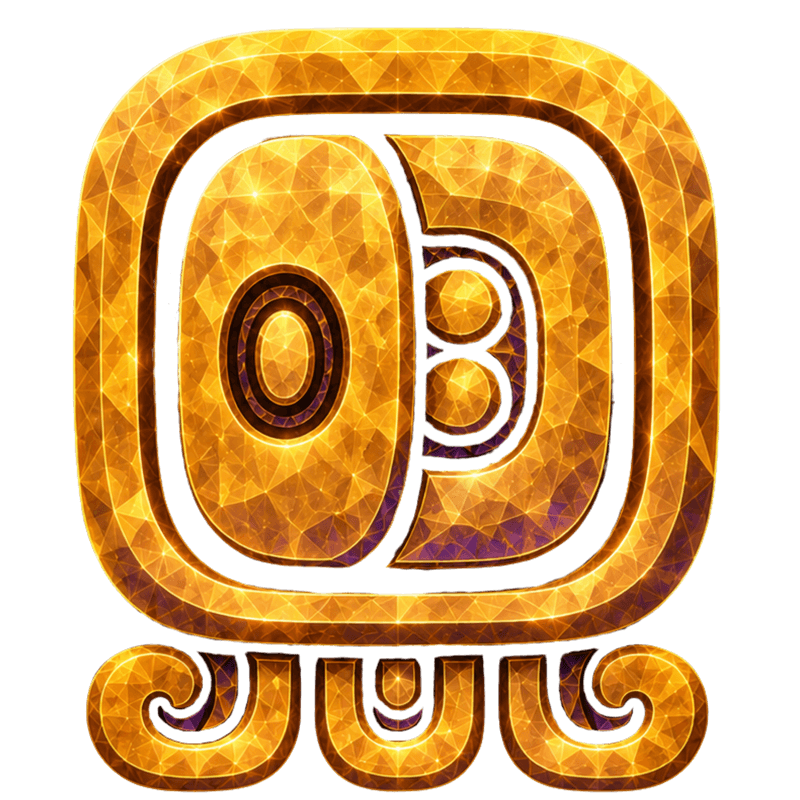
Nawal Toj
Offering / Water · Balance restored. What we owe, what we offer.
The nawal Toj, also searched as Muluk, is the Maya day sign of the Cholq'ij associated with offering / water. In short: Reciprocity, payment, the fire ceremony. Balance restored. What we owe, what we offer.
You feel the weight of balance. Toj people are acutely aware of what is owed: in relationships, in the world, in their own lives. You have a strong sense of fairness that can read as perfectionism from the outside but is, at its core, a genuine moral compass. When things are out of balance, you feel it physically.
Your gifts are integrity, healing, and the capacity to restore what has been broken. You are the person who makes things right. Ceremony, ritual, and acts of gratitude come naturally to you. You instinctively know that things must be acknowledged and offered and returned. This makes you a powerful healer and a trustworthy ally.
The work of Toj is learning that not every debt is yours to pay. You can exhaust yourself settling accounts that were never opened in your name. Practice receiving without immediately calculating how to repay. Let an offering be made to you sometimes. You have earned it.
What does the nawal Toj mean?
The nawal Toj, also searched as Muluk, is the Maya day sign of the Cholq'ij associated with offering / water. In short: Reciprocity, payment, the fire ceremony. Balance restored. What we owe, what we offer.
| K'iche' name | Toj |
|---|---|
| Yucatec / public variant | Muluk |
| Commonly searched as | Toj, Toj, Muluk, toj, maya nawal, nahual maya, nahual, maya day sign, maya zodiac |
| Calculate your date | Use the Maya nawal calculator |
Your nawal is only half of a day in the Cholq'ij. Every sign is paired with a number from 1 to 13 that changes its intensity and timing. This is not a Maya zodiac of 12 fixed signs, it is a living 260 day count. See how the 13 numbers work, or calculate your nawal and your number.
Go deeper: the documented teaching
Essence
Toj is the nawal of offering, payment, and reciprocity: the day tied to the sacred fire ceremony and to restoring balance between what has been given and what remains owed. Within K'iche' tradition it takes in offering, penalty, payment, assistance, listening, and understanding, alongside the nawal of fire itself. This early entry relies on the Komon Tohil K'iche' daykeeper source as its main reference, keeping the Yucatec/Classic correspondence apart from Dreamspell seal terminology.
Strengths
- Reconciliation, self-instruction, and the ability to draw hidden matters into the open.
- Holds a Traditional day/nawal meaning that may later be paired with a 1-13 number coefficient.
Shadow
- Risk of becoming stuck in debt, in avoiding mistakes, or in suffering left unresolved.
- Treating this as a universal Maya personality system would go beyond what the current sources support.
Path
Give the offering that restores balance, rather than paying endlessly out of fear. In runtime synthesis, the day/nawal carries the core Traditional meaning while the coefficient adjusts intensity or timing.
Where traditions differ
In K'iche' the sign is written Toj, while Yucatec and Classic-era public sources record it as Muluk. The gloss given in the English source field reads: offering, payment, help. Dreamspell assigns a separate seal label to the same index, and this should not be used as the source of meaning for this entry. Komon Tohil orders day meanings in a table beginning with B'atz'; the GMT calculation may instead use an internal sequence beginning with Imix/Imox.
What does nawal Toj mean?
Toj is the eighth day sign of the traditional Cholq'ij. It is the sign linked most closely to the sacred fire ceremony (known as q'oq' or pwaaq in K'iche' practice), the act of offering something to restore right relationship between a person or community and the network of obligations they belong to. The "penalty" or "payment" in Komon Tohil's account is not a punishment; rather, it is the restoring of balance: what is owed to the fire, the ancestors, the land, and the community gets paid, and balance follows.
Toj days rank among the most significant in the Cholq'ij for ceremonial purposes. Komon Tohil links them to acts of reconciliation, to resolving spiritual or material debts, and to prayers for healing from suffering built up over time. The self-instruction mentioned under strengths points to Toj energy's particular capacity to reveal our own patterns: what is owed, what has gone unpaid, and how the clearing of it can begin.
Toj among the other nawales and around the lake
Toj comes after Kej (the deer, the four directions, foundational structure) and before Tz'i' (the dog, law, loyalty, justice through authority). The sequence holds together: from the steady foundation of four cornered structure, through the fire of reciprocal payment, and into the territory of social law and right relationship.
Use the Nawal Calculator to find the next Toj day within the current 260 day round. For a fuller picture of how tones and day signs interact, see the Tzolk'in Tones hub. Around Lake Atitlán, Toj ceremonies are most visible in Santiago Atitlán, where the cofradía system and the Maximon tradition both place acts of offering and reciprocal obligation at the heart of community wellbeing.
Nawal Toj: frequently asked questions
What does the nawal Toj mean?
The nawal Toj, also written Muluk, is one of the 20 day signs of the sacred Maya calendar, the Cholq'ij. Reciprocity, payment, the fire ceremony. Balance restored. What we owe, what we offer.
How do I find my nawal? Is Toj my Maya day sign?
Enter your birth date in the nawal calculator. If your Cholq'ij day sign comes out as Toj, that is your nawal. This is not a Western horoscope with 12 star signs, it is a Maya calendar birth day drawn from a 260 day cycle. Use the nawal calculator to work out your own day sign and number.
Are Toj and Muluk the same day sign?
Yes. Toj is the K'iche' spelling kept by the Ajq'ijab' (day keepers) of Lake Atitlan, and Muluk is the Yucatec variant you will see used elsewhere. Both names point to the same day sign within the 260 day count of the Cholq'ij.
Sources and further reading
This page draws together published academic and ethnographic scholarship. It presents the living K’iche’ tradition through documented sources rather than as insider authority.
- Komon Tohil (K'iche' Day Keepers Collective), The Meaning of the Days
- Dr Diane Davies, The Maya Calendar Explained, Maya Archaeologist
- Barbara Tedlock, (1992), Time and the Highland Maya
Is Toj your nawal?
Enter your birth date to calculate your Cholq'ij day sign, your number and your path for a deeper reading.