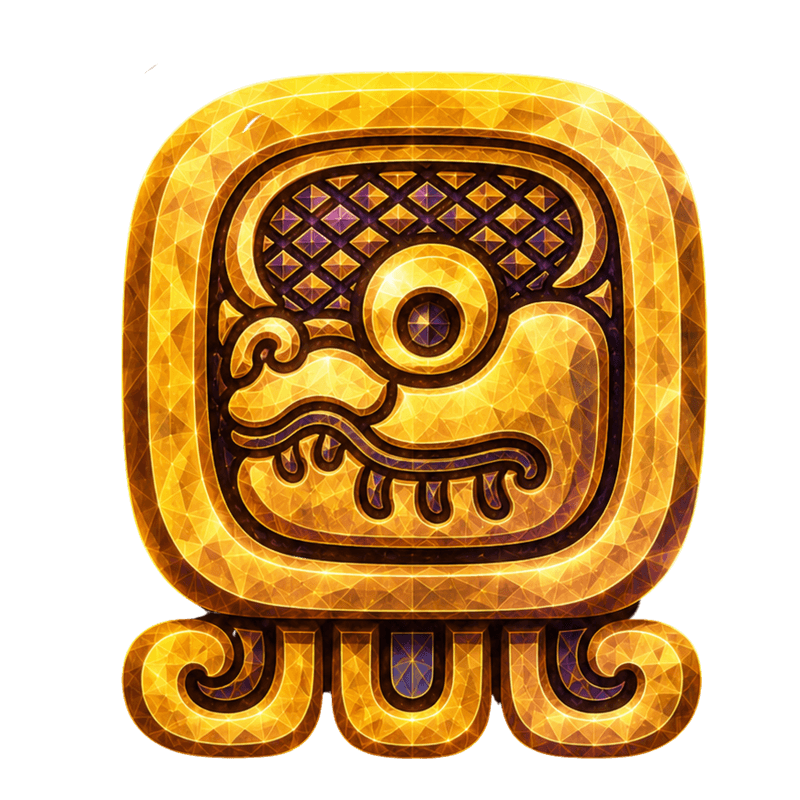
Nawal Kan
Serpent · Truth-speaking, wisdom of the body, transformation.
The nawal Kan, also searched as Chikchan, is the Maya day sign of the Cholq'ij associated with serpent. In short: The fire serpent, kundalini, justice. Truth-speaking, wisdom of the body, transformation.
You carry fire. Kan is the serpent of sacred energy: coiled, ready, powerful. You feel things with intensity. You are drawn to truth even when it is uncomfortable, and you have a natural instinct for what is real underneath what is performed. People cannot easily deceive you, and you know it.
Your gifts are transformation, courage, and the capacity to shed what no longer serves. Like the serpent that sheds its skin, you are built for reinvention. You can heal deeply, and you are capable of helping others heal once you have done your own work. The body knows things your mind has not caught up to yet. Trust it.
The serpent's danger is venom: using your sharpness to wound rather than to clarify. When you are out of alignment, your directness becomes destruction. Ask yourself before you speak: am I revealing truth, or am I trying to dominate? The distinction is the whole practice of Kan.
What does the nawal Kan mean?
The nawal Kan, also searched as Chikchan, is the Maya day sign of the Cholq'ij associated with serpent. In short: The fire serpent, kundalini, justice. Truth-speaking, wisdom of the body, transformation.
| K'iche' name | Kan |
|---|---|
| Yucatec / public variant | Chikchan |
| Commonly searched as | Kan, Kan, Chikchan, kan, maya nawal, nahual maya, nahual, maya day sign, maya zodiac |
| Calculate your date | Use the Maya nawal calculator |
Your nawal is only half of a day in the Cholq'ij. Every sign is paired with a number from 1 to 13 that changes its intensity and timing. This is not a Maya zodiac of 12 fixed signs, it is a living 260 day count. See how the 13 numbers work, or calculate your nawal and your number.
Go deeper: the documented teaching
What Kan represents
Kan is the nawal of the feathered serpent, the creative force of life and the bringer of justice in the Maya Tzolk'in. It is bound up with shaping and framing, with justice, truth, peace, strength, health, and work. This first pass draws its meaning chiefly from the Komon Tohil K'iche' daykeeper tradition, and keeps the Yucatec/Classic naming and the separate Dreamspell seal language apart from that core meaning.
Its strengths
- Skilful, wise, sincere, and strong, with the ability to restore order without draining vitality out of the process.
- Carries a Traditional day/nawal meaning that can later be paired with a coefficient running from 1 to 13.
Its shadow side
- Anger can warp this very same force that otherwise seeks out justice and peace.
- Treating this as a fixed, universal template for Maya personality would go beyond what the source material actually supports.
Its path forward
Allow strength to travel through truth and peace before it ever moves through reaction. Within the wider calculation, the day/nawal ought to carry the core Traditional meaning, with the coefficient shaping how strongly or when it lands.
Where traditions differ
In K'iche' the sign is written Kan, while Yucatec and Classic-era public sources record it as Chikchan. The gloss given in the English source field reads: feathered serpent. Dreamspell assigns a separate seal label to the same index, and that should not be used to define this node's meaning. The Komon Tohil source lists day meanings in a table that begins with B'atz', whereas GMT calculation may instead run an internal sequence beginning with Imix/Imox.
What does the Maya Kan sign mean?
Kan holds fifth place among the day signs of the traditional Cholq'ij and ranks among the most potent of the twenty nawales. The feathered serpent at its heart is one of Mesoamerica's great symbols: a creature of the earth, the serpent, granted the power to travel through air by way of its feathers, pointing towards a change from the physical into the spiritual that never abandons either side. Within K'iche' tradition, Kan carries the force that turns raw potential into structure, the justice that restores what has fallen out of balance, the skilled hand that builds something both useful and lasting.
Komon Tohil links Kan days to petitions for health, to strength in legal or community disputes, and to the kind of labour that leaves something tangible behind. The anger named in its shadow is that same force running unchecked, the raw serpent's energy stripped of the feather's guidance.
How does Kan relate to the other day signs and the calendar?
Kan follows K'at, the net and its untangling, and comes before Kame, death and the ancestral crossing. That order carries meaning: the serpent rises once the net has been sorted out, and moves onward towards the threshold of transformation. The feathered serpent energy of Kan differs from the heavy boundary work of Kame; it is kinetic, skilled, and set on building something that endures.
The Nawal Calculator will find the next Kan day within the current 260 day round. For more on how tonal numbers strengthen or soften Kan's building force, visit the Tzolk'in Tones hub. The ancient Tz'utujil ceremonial site of Chuitinamit, visible from Santiago Atitlán, is among the best spots at the lake to stand within the ordered, deliberately built presence that Kan embodies.
Nawal Kan: frequently asked questions
What does the nawal Kan mean?
The nawal Kan, also written Chikchan, is one of the 20 day signs of the sacred Maya calendar, the Cholq'ij. The fire serpent, kundalini, justice. Truth-speaking, wisdom of the body, transformation.
How do I find my nawal? Is Kan my Maya day sign?
Enter your birth date in the nawal calculator. If your Cholq'ij day sign comes out as Kan, that is your nawal. This is not a Western horoscope with 12 star signs, it is a Maya calendar birth day drawn from a 260 day cycle. Use the nawal calculator to work out your own day sign and number.
Are Kan and Chikchan the same day sign?
Yes. Kan is the K'iche' spelling kept by the Ajq'ijab' (day keepers) of Lake Atitlan, and Chikchan is the Yucatec variant you will see used elsewhere. Both names point to the same day sign within the 260 day count of the Cholq'ij.
Sources and further reading
This page draws together published academic and ethnographic scholarship. It presents the living K’iche’ tradition through documented sources rather than as insider authority.
- Komon Tohil (K'iche' Day Keepers Collective), The Meaning of the Days
- Dr Diane Davies, The Maya Calendar Explained, Maya Archaeologist
- Barbara Tedlock, (1992), Time and the Highland Maya
Is Kan your nawal?
Enter your birth date to calculate your Cholq'ij day sign, your number and your path for a deeper reading.