Dot
A dot counts one unit. Four dots can sit above the bars before the next bar is needed.
A base-20 way to write numbers with dots for one, bars for five, and a shell sign for zero. Start with the 0 to 19 numerals, then see how the 13 Cholq'ij tones shape sacred calendar days.
A dot counts one unit. Four dots can sit above the bars before the next bar is needed.
A bar counts five units. Three bars and four dots reach 19 in one place.
The shell marks zero, letting an empty place hold its position in a larger number.
Maya numerals use three visual ideas: a dot for one, a bar for five, and a shell sign for zero. With those marks, the numbers 0 through 19 can be written clearly before a higher place is needed.
The system is vigesimal, which means it is organized around groups of 20. A single place can hold any value from 0 to 19. Once the count rises above 19, Maya numerals can be stacked vertically, with the lowest place at the bottom and higher places above it.
The shell sign is more than a blank. It is one of the earliest documented uses of zero as a real placeholder. In a positional number, a zero can say that one place is empty while the places above it still keep their value. That idea made large counts readable and helped calendar inscriptions record long spans of time.
The sacred Cholq'ij or Tzolk'in uses a different but related count: 13 numbers paired with 20 day signs. Every day receives both a number and a nawal, creating 260 unique day positions. In this site, the meanings of those 13 tones come from the shared calculator data so the content and the tool stay aligned.
Read the 0 to 19 entries as visual numerals. Read the 13 tones entry as calendar context. The two belong together in Maya timekeeping, but they answer different questions: how a number is written, and how a sacred calendar day is qualified.
Place value
For numbers above 19, Maya numerals can stack vertically with the ones place at the bottom and higher places above it.
The shell sign marks one of the earliest documented uses of zero as a real placeholder. That allows a place to be empty without collapsing the value of the full number.
The calendrical Long Count uses a related modified count: 1, 20, 360, then higher places multiplied by 20.
42 can be read as 2 twenties and 2 ones.
Numerals
Cholq'ij
The tones are calendar numbers, not the same thing as the 0 to 19 written numerals. They pair with the 20 nawales to make the 260-day Cholq'ij.
Free, no email, instant.
Calculated with the GMT 584283 correlation for the 260 day sacred calendar.
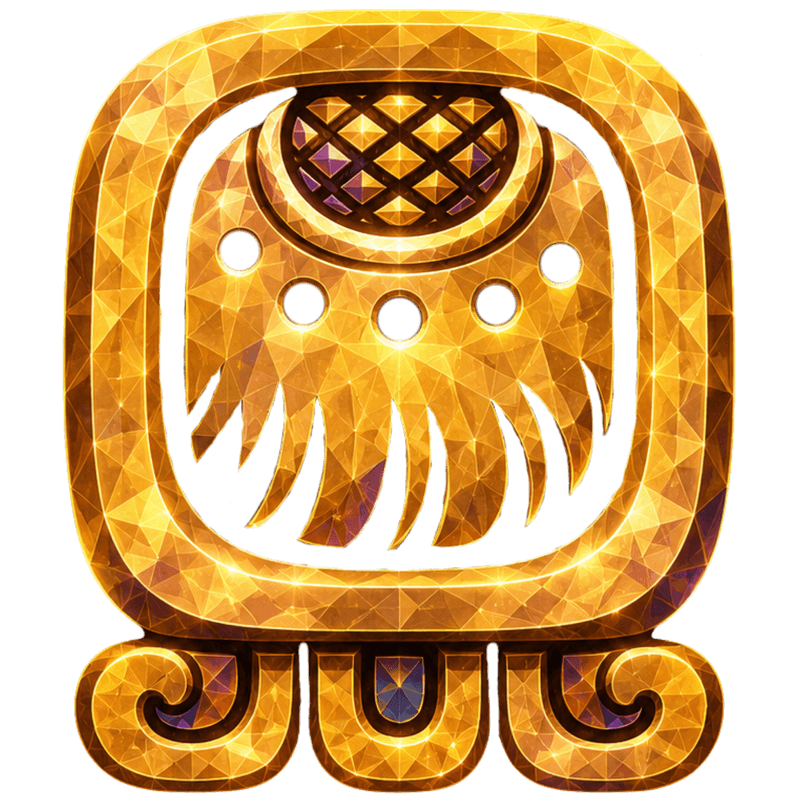
Choose your birth date and press Reveal my Nawal to discover the energy that guides your day.
Your complete birth-Nawal reading will be sent now. Recurring readings are optional. You can unsubscribe at any time.